Chapter 10: A Glass of Water
The payment was $2,900.
Lucinda and Hector’s security deposit.
I called Lucinda before I left Adrian’s office.
“The recovery is complete,” I said. “I can return your deposit now.”
Lucinda went quiet.
“Does that mean you want us out?”
“No,” I said. “Your lease continues. This changes nothing about your right to stay.”
“Then why return it?”
“Because that money was held without proper accounting. You shouldn’t have to keep waiting for it.”
Adrian had prepared the written amendment.
No replacement deposit.
No cancellation of the lease.
No condition that the family forgive anyone.
I read it again before putting it in my folder.
The recovered rent remained in Owen’s trust.
The reimbursed expenses were accounted for separately.
None of the money became a reward I could spend because I had suffered.
Adrian handed me a small envelope.
“One more item returned through counsel,” Adrian said.
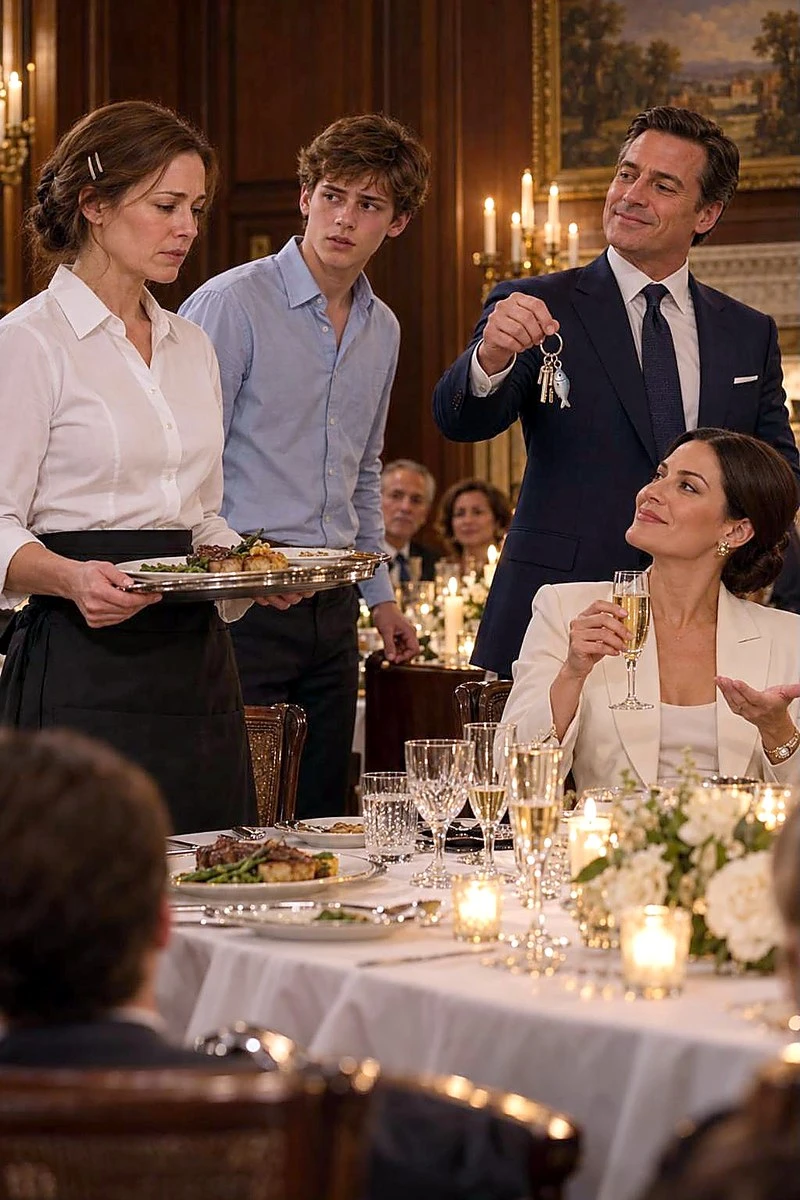
Inside lay my mother’s keys.
The tin fish rested against my palm.
Its bent tail was exactly as Owen remembered it.
I closed my hand gently.
“Thank you,” I said.
Adrian looked at the folder under my arm.
“You have the next review dates?”
“Yes.”
“And the property records?”
“Separate folder. Current copies.”
I had once wanted somebody to tell me everything was fine.
Now I wanted records I could check.
That afternoon, December 4, Hector let me into the bungalow.
Lucinda was clearing a space at the kitchen table.
Mateo’s schoolwork lay beside a bowl of oranges.
I set down the payment and amendment.
Lucinda read the document slowly.
Hector read it after her.
They asked questions.
I answered the ones I understood and called Adrian about the others.
Nobody told them to hurry.
When they were satisfied, we completed the amendment and kept our copies.
Lucinda looked at the payment.
“We really don’t have to put this back into another deposit?”
“No.”
Hector rubbed his forehead.
“We can replace the car tires,” Hector said.
Something ordinary.
Something their money should have been available for.
“I’m sorry for the inconvenience,” I said.
Lucinda looked up.
“It was more than inconvenience.”
I put my hands flat on the table.
“You’re right.”
“We packed Mateo’s school things,” Lucinda said. “We kept wondering which knock would mean we had to leave.”
Hector looked toward the hallway.
“He asked if he could take the marks on the doorframe.”
I followed his eyes.
Mateo’s height marks.
Pencil against paint.
“I didn’t know,” I said.
“You should have known we were here,” Lucinda said.
There was no cruelty in her voice.
That made it harder to hear.
“Yes,” I said. “I should have.”
I could have explained the shifts, the grief, the reports I had believed.
They already knew enough of that.
“I failed to check,” I said. “I’m sorry. You deserved an owner’s representative who knew what was happening.”
Lucinda sat back.
“What happens from now on?”
“Rent goes directly to the verified trust account,” I said. “You get confirmation. Repairs come directly to me, and I keep the records.”
“And if someone says they speak for you?”
“Call me. Use the contact information in the lease. Don’t accept their word.”
Hector nodded.
I took the fish key ring from the envelope.
Lucinda recognized it.
“Bernice used those.”
“They were my mother’s,” I said. “Owen gave her the fish.”
I laid them beside the oranges.
“They belong with the house. You’re entitled to use it.”
Lucinda touched the bent tail.
“Does Owen mind?”
“I asked him before I came.”
“And?”
“He wants it hanging by Grandma’s door.”
Hector put the ring on the kitchen hook.
The small fish turned once.
Then settled.
As I got up to leave, Lucinda stopped me.
“We’re having supper next Saturday,” Lucinda said. “You and Owen should come.”
“You don’t owe us dinner.”
“I know,” Lucinda said. “I’m inviting you.”
That difference mattered.
On Saturday, December 12, I worked the lunch shift at Copper Lantern.
The room smelled of garlic butter.
My towel hung over my arm.
A customer asked me to explain the difference between two cuts of steak, and I did.
He listened.
Then ordered.
An ordinary exchange.
I had missed how much peace there could be in one.
After service, Denise asked me to step into her office.
She had heard the cases were resolved.
“I’m glad you got through it,” Denise said.
“So am I.”
Denise folded her hands.
“With everything that happened, maybe you can move on now.”
“I am moving on.”
“I mean from this,” Denise said. “You deserve something better than waiting tables.”
I looked at her.
“Better in what way?”
Denise hesitated.
“Something where people respect you.”
“People can respect me here.”
“You know what I mean.”
“I’d like you to say it.”
Denise shifted in her chair.
“You’re too good for those tables, Della.”
“Then what does that make the people still serving them?”
“That isn’t what I meant.”
“It’s what you said.”
Denise looked down at the schedule.
“I was trying to be kind.”
“I need you to respect my work. That’s different.”
She raised her eyes.
“I do respect it.”
“Then when a guest humiliates one of us, we need help before it gets worse.”
“I should have moved you.”
“Yes.”
“I’ve admitted that.”
“And I need to know what happens next time,” I said. “For anyone working here.”
Denise was silent.
I kept my voice steady.
“I want my regular shifts. I want a clear way to hand over a table when a guest starts treating staff like that.”
“All right,” Denise said.
“Not because you feel sorry for me.”
“Because you’re right,” Denise said.
She pulled a blank sheet toward her.
“We’ll make the handover procedure clear to every shift manager.”
I nodded.
That was something I could use.
When I left, I carried my folded apron in my bag.
I did not throw it away.
That evening, Owen and I drove to Bramble Lane.
He was eighteen now, but he still checked whether I had brought my coat.
I had.
Lucinda opened the green door.
“Come in,” Lucinda said. “Hector’s almost finished.”
Owen handed her the bread we had brought.
Mateo came down the hallway carrying a small stack of plates.
“Can you help me?” Mateo asked Owen.
“Sure,” Owen said.
They went into the dining area together.
My mother’s photograph stood on a shelf.
Beside it was Owen’s graduation picture.
Lucinda saw me looking.
“He brought that when he helped Hector with the bicycle,” Lucinda said.
In the picture, Owen was smiling.
So was I.
No one had needed to pretend the family was unchanged.
We had simply been glad he had graduated.
I watched him set the plates down.
The house remained in his trust until the distribution provided for in its terms.
Turning eighteen had not ended the Ibarras’ lease.
His future did not require their home to disappear.
Lucinda put a bowl on the table.
I reached for it.
“I can take that through,” I said.
“I’ve got it,” Lucinda said.
I stepped aside.
That was harder than lifting it would have been.
Owen pulled out my place.
“Mom,” Owen said. “Sit down.”
I sat.
Hector brought the food.
Mateo told us about something he had made at school.
Nobody interrupted to correct how he should speak to his mother.
Nobody snapped their fingers.
The fish key ring hung beside the door.
My apron stayed in my bag.
Owen picked up the water jug.
I looked around the table.
I was still a waitress.
I was also a mother, a trustee, and a woman whose welcome did not depend on what she could carry.
My son filled my glass.
Then he lifted his own.
“To Mom,” Owen said.
The End.