Chapter 2: Her Phone Wasn’t Broken
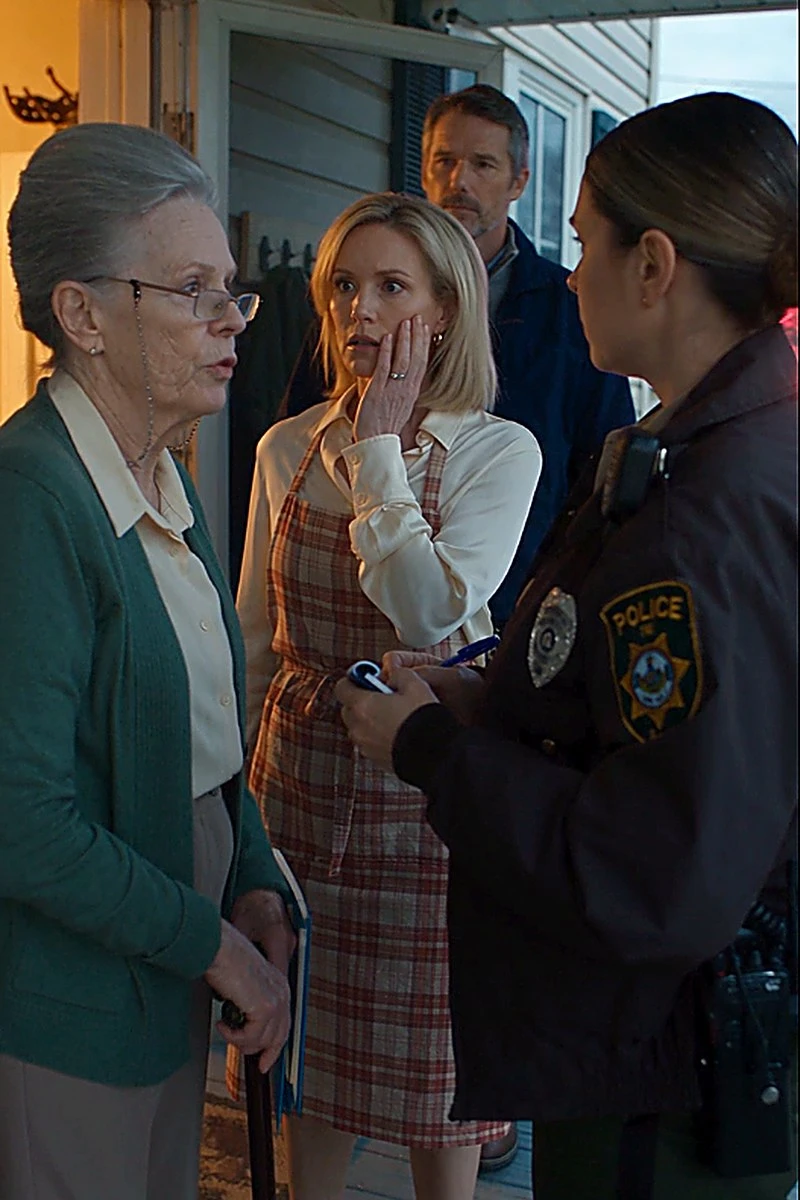
“I never signed that,” my mother said.
I looked up from the October 16 date.
Derek’s hand was still hovering near my phone. He lowered it.
“Evelyn,” Claire said, “you don’t have to remember every form.”
“I remember deciding who can handle my money,” my mother replied. “I did not choose you.”
She rested both hands on the blue folder.
I looked again at the page Derek had given me. My mother’s name appeared above language authorizing banking transactions and real-estate matters.
It sounded less like assistance the second time I read it.
“Where’s the signed page?” I asked Derek.
“The complete execution copy is in the permanent file,” he said. “This explains the authority.”
“Then bring me the complete copy,” I told him.
“We should go through everything together,” Derek replied.
“We’re together now,” I said.
Claire stepped away from the doorframe.
“This started after the surgery,” she said. “Your mother needed somebody to help with the ordinary things.”
My mother looked at her.
“I needed someone to drive me to physical therapy,” she said. “That was the ordinary thing.”
Claire pressed her lips together.
I remembered the hospital discharge paperwork.
The walker folded into my trunk.
The nurse explaining that my mother should avoid stairs until she felt steady.
I had helped arrange groceries and rides. I had asked Claire to coordinate the appointments when I went back to work.
Nothing about that had required control over a house.
“Mom,” I said, “did you ask anybody to sign your name for you?”
“No,” my mother replied.
Claire made a small, impatient movement with one hand.
“Nobody’s taking anything from her,” she said.
I had not accused anyone of taking anything.
Until then, I had been thinking about a signature.
My mother rose from the bed.
Derek immediately stepped toward her.
“Let’s leave the paperwork until everybody has settled down,” he said.
“I am settled,” my mother replied. “Move, please.”
He moved.
She tucked the blue folder beneath her arm and reached for her cane.
I stood beside her, waiting.
“Where would you like to go?” I asked.
“The back hall,” she said. “I want to show you something.”
Claire looked at me.
“Your mother has been climbing stairs all afternoon,” she said. “You’re going to exhaust her.”
“I’ll rest when I need to,” my mother replied.
I put the copy Derek had given me inside my jacket pocket.
He watched me do it.
At work, when a control panel failed, I started with what I could verify. I photographed the display. I wrote down what happened before the failure. I kept the original parts.
At home, I had apparently been willing to accept a cheerful summary.
Claire picked up a framed photograph from the dresser, straightened it, and put it down again.
It had not been crooked.
“I wish you would give me a little credit,” she said. “I’ve been here.”
My mother paused beside the doorway.
“You have,” she said.
Claire waited for something else.
Nothing came.
I followed my mother toward the stairs.
Behind us, Derek closed his leather folder.
The sound was sharp enough to make me turn.
He held it against his chest.
“I’ll get the other material,” he said.
“Bring the parts with her signature,” I told him.
He nodded without looking at my mother.
* * *
The cream telephone stood on a narrow cabinet in the back hall.
It had been there for years.
My father used to leave grocery lists beside it. My mother had kept a small address book in the drawer underneath, even after everybody else started storing numbers on their phones.
There was a folded dish towel over the handset.
I lifted it.
A square of masking tape on the base read NOT WORKING.
“Claire said the line had gone bad,” my mother said.
I pressed the button marked TALK.
There was no dial tone.
The screen lit up.
CHECK TELEPHONE LINE.
Claire stood in the kitchen doorway.
“We tried it several times,” she said. “I told her we would get it replaced.”
I followed the thin telephone cable with my hand.
It ran behind the cabinet, disappeared beneath a framed picture, and ended in a clear plastic plug.
The plug was not in the wall jack.
It lay coiled behind the photograph.
The power cord was still connected.
I held up the loose cable.
Claire glanced at it.
“That must have come out when we cleaned,” she said.
The cabinet was heavy. The jack was low against the baseboard.
My mother could reach the handset from a standing position.
She could not easily kneel behind the cabinet with her recovering knee.
I crouched and pushed the plug into the jack.
Then I pressed TALK again.
The dial tone filled the little hallway.
My mother closed her eyes for a moment.
Claire reached for a stack of napkins on the kitchen counter.
“Well, good,” she said. “That saves us buying another one.”
I put the handset in my mother’s hand.
She opened the drawer and took out her address book.
Her fingers found Deborah Price’s number without hesitation.
“Put it on speaker,” my mother told me. “I want you to hear.”
I pressed the button.
Deborah answered on the fourth ring.
“Evelyn?” Deborah said.
“It’s me,” my mother replied. “Nathan came home early.”
“Oh, thank goodness,” Deborah said.
I looked at Claire.
She turned toward the dining room.
“Hello, Deborah,” I said. “We’ve got Mom’s telephone working.”
There was a short silence.
“What was wrong with it?” Deborah asked.
“The cable was disconnected,” I said.
My mother touched the masking tape.
“Claire said you were busy when I asked about seeing you,” she told Deborah.
“I wasn’t busy,” Deborah replied. “I brought soup over last week. Claire met me on the porch and said you wanted to be left alone.”
“I wanted soup and company,” my mother said.
Deborah took a breath.
“That’s what I thought,” she replied.
I pulled the towel completely off the telephone base.
Underneath was the little plastic card where my father had written the house number.
I had known that number since childhood.
Lately, I had called Claire to ask how my mother was doing.
It was quicker.
That was the reason, stripped of everything I usually put around it.
Quicker.
“There were other times,” Deborah said. “I rang the bell on Sunday. Claire told me you were resting.”
“I was in the kitchen,” my mother replied.
I heard a door close on Deborah’s end of the call.
“Nathan, I don’t want to speak for your mother,” Deborah said. “But when she tells you something, please listen to her.”
“I am,” I replied.
I almost added that I always had.
The words stopped before they reached my mouth.
My mother took the phone off speaker.
She spoke quietly to Deborah for another minute, then ended the call herself.
I started to peel away the masking tape.
“Leave it,” my mother said.
I lowered my hand.
She looked at the words.
“I want to remember what I was told,” she said.
From the dining room, Claire called for someone to help clear the plates.
Nobody came into the hall.
My mother put the address book back in the drawer.
“The telephone was one thing,” she said. “There’s something else.”
* * *
The utility room was on the ground floor, beyond the kitchen.
It held the washer, dryer, a shallow sink, and the old wall cabinet where my mother kept detergent and lightbulbs.
She opened the cabinet.
Behind a box of spare batteries was a brown envelope.
She handed it to me.
“These belong to me,” she said. “You may read them.”
I laid the envelope on the dryer.
Inside were several pieces of mail, all opened neatly along the top.
There was a pharmacy statement.
A credit-card notice.
An envelope from her insurance company with a forwarding label covering part of the original address.
I recognized the new address.
Derek’s business office.
He had rented it two years earlier, then made a joke at Christmas about finally having somewhere to put all the forms people brought him.
I had brought him some myself.
A tax document I didn’t understand.
An insurance reimbursement I hadn’t had time to chase.
I stared at the label.
“When did you ask for your mail to go there?” I asked.
“I didn’t,” my mother replied.
I turned the insurance envelope over.
It had been sent to this house first.
The forwarding information named Evelyn Mercer.
Not Claire.
Not the entire household.
My mother.
There was also a notice confirming that a change had been requested.
I read the destination twice.
My mother lowered herself onto the small bench beside the laundry baskets.
“I found that one between the grocery advertisements,” she said. “Claire usually brought the mail inside.”
I held up the insurance envelope.
“How did you get this back?” I asked.
“Derek brought it over,” my mother replied. “He said he had already checked it.”
A folded page inside bore a pencil mark beside the amount due.
PAID.
The handwriting was Derek’s.
My mother watched me examine it.
“He told me it was easier if everything went through one place,” she said. “I told him the one place was my house.”
I looked around the room.
There was a bottle of stain remover with the price written on its cap. A packet of sewing needles sat beside a torn pillowcase waiting to be repaired.
My mother had always kept track of things.
Dad brought home receipts in balls.
She smoothed them out.
He forgot renewal dates.
She put them on the calendar.
Now her calendar was upstairs with an empty space on the wall, and her mail was going to somebody else’s office.
I took photographs of the envelopes.
Then I laid them back in the order she had given them to me.
“May I keep the pictures?” I asked.
“Yes,” my mother said. “The originals stay here.”
I nodded.
Claire appeared in the doorway carrying two wineglasses.
“You don’t need to make a project out of the laundry room,” she said.
I held up the forwarding notice.
“Why was Mom’s mail sent to Derek’s office?” I asked.
Claire set the glasses on the sink.
“Because important bills were getting mixed in with junk,” she replied.
“Which bills?” I asked.
“The point was to prevent a problem,” Claire said.
My mother stood.
“I had not asked you to prevent that problem,” she said.
Claire looked at her, then at me.
“I can’t win,” she said. “If I help, I’m interfering. If I don’t, I’m neglecting her.”
I put the notice on the dryer.
“You can give her the mail,” I said.
Claire picked up the glasses again.
“Derek can explain the administrative side better than I can,” she replied.
She left without touching the envelope.
My mother took the papers from me and slipped them back inside.
I had expected her to seem relieved that I was finally asking questions.
Instead, she looked tired.
I was making her explain something she had already lived through.
“Would you like to sit for a while?” I asked.
“In a proper chair,” my mother replied.
I opened the utility-room door for her.
Across the kitchen, the folding chair remained beside the trash can.
Nobody had moved it.
* * *
My mother chose the armchair near the dining-room window.
I brought a dining chair over and sat beside her.
The dinner had broken into smaller conversations. Several guests stood with coffee cups. Others gathered around the remains of the food.
Claire began collecting dessert plates.
She spoke brightly about the pie.
Mine was still in the car.
Martin approached with a cup of tea.
“Evelyn, would you like this?” he asked.
“Yes, thank you,” my mother replied.
He set it on the little table beside her.
Then he looked at me.
“Whatever this is, take it slowly,” Martin said. “There’s a lot of information.”
“I’m trying to get it,” I replied.
He glanced toward Derek.
Derek had placed his leather folder on the sideboard.
I stood, but before I moved away, I asked my mother whether she wanted to see what he brought out.
“Yes,” she said. “Put it where I can read it.”
I shifted my chair closer to the sideboard, leaving her a clear view.
Derek spread several pages over the polished wood.
“This should settle the misunderstanding,” he said.
I took out the forwarding notice I had photographed on my phone.
“Mom’s mail went to your office without her permission,” I told him.
“She authorized help with administrative matters,” Derek replied.
“She just told us she didn’t authorize you to redirect her mail,” I said.
Derek flattened a page with his palm.
“We have to distinguish between what people remember and what they agreed to,” he said.
My mother leaned forward.
“Then distinguish carefully,” she replied.
Claire joined us.
She placed one hand on the back of my chair.
“Nathan, Derek has spent hours on this,” she said. “Let him finish.”
I looked at the forms.
There was a bank logo on one.
Buckeye Community Bank.
Another page bore my mother’s name and the address of this house.
I lifted it.
Derek put two fingers on the upper edge.
“That belongs with the packet,” he said.
“I’m reading it here,” I replied.
He removed his hand.
The page was headed BORROWER INFORMATION.
I read the first section.
Name.
Date of birth.
Residential address.
Years at current residence.
All correct.
Below that was a box describing the requested credit.
Home-equity loan.
I looked up.
“This isn’t ordinary bill-paying,” I said.
Derek pulled another sheet from the folder.
“It’s a financial arrangement,” he replied. “Your mother has significant resources tied up in the property.”
My mother set her cup down.
“I know what my house is,” she said.
“The bank does, too,” Derek replied.
Claire’s hand tightened on the chair.
“It gives us options,” she said.
I looked at her.
“Who is us?” I asked.
“The family,” Claire replied.
My mother shifted the blue folder on her lap.
“I have not asked the family to borrow against my house,” she said.
A man holding a coffee cup paused a few feet away.
Claire turned toward him.
“We’re just sorting out some paperwork,” she said.
He walked toward the kitchen.
I looked down again.
The requested purpose referred to home improvements and debt consolidation.
My mother had mentioned a loose porch rail to me in October.
I had said I would fix it when I came back.
She had not mentioned needing a loan.
I laid the page where she could reach it.
“May I read the rest with you?” I asked.
“Yes,” my mother replied.
Derek started to gather the loose sheets.
Claire stopped him with a glance.
I saw that.
For the first time that afternoon, I watched the two of them without assuming they were helping.
Derek released the papers.
The borrower-information sheet included my mother’s retirement income. Her mailing address had been entered as Derek’s office.
Then I reached the contact section.
A telephone number appeared beneath my mother’s name.
I knew the number before I finished reading it.
I had dialed it from hotels, airports, loading docks, and hospital waiting rooms.
It belonged to the person standing behind my chair.
The loan application listed my wife’s number as my mother’s.