Chapter 8: She Signed Her Own Name
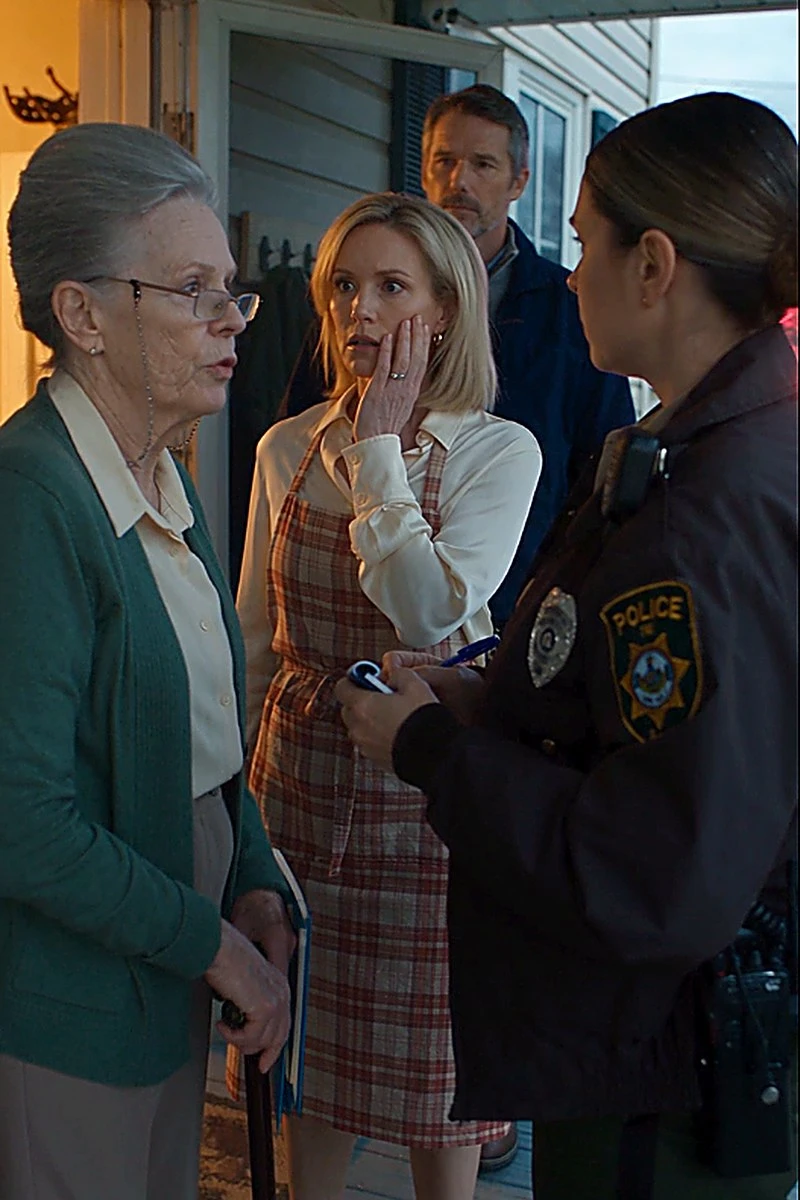
I had read her request for privacy and sent it to the one person she had asked me to keep it from.
I lowered the pages.
My mother was still on the step.
I opened the car door.
“You asked me to keep it between us,” I said.
“Yes,” my mother replied.
“I sent it to Claire,” I said. “Then I didn’t call you.”
My mother held the porch rail.
I wanted to explain the hotel room, the early meeting, the work waiting on my phone.
None of that changed what I had done.
“I’m sorry,” I said.
My mother looked at the pages in my hand.
“What happened afterward belongs in the record,” she said.
“I’ll give Maya the whole exchange,” I replied.
“Including your message,” my mother said.
“Including mine,” I answered.
She nodded.
I put the papers back in the envelope.
I had been thinking about evidence as something that would establish what other people had done.
My name was on this part.
* * *
Monday morning, December 1, I placed the email exchange on Maya’s desk before she asked for it.
My mother sat beside me.
Maya read the first message, then my forwarded note, then Claire’s response.
“This is the complete exchange as Evelyn preserved it?” Maya asked.
“Yes,” my mother replied.
“I also brought it from my own account,” I said.
I had found the message Sunday night.
The subject line was familiar.
The words were mine.
Maya compared the copies.
“I knew Mom wanted a private conversation,” I told her. “I sent it to Claire anyway because I thought she could deal with the problem.”
My mother kept her eyes on the desk.
Maya made a note.
“Were you aware of the proposed loan when you forwarded it?” she asked.
“No,” I replied.
“Did you speak to Evelyn about the request afterward?” Maya asked.
“No,” I said.
The second answer was harder.
I had built an explanation around being unaware of the loan.
It did not explain why I had failed to return a call my mother specifically requested.
Maya placed the exchange with the communication records.
My mother looked at me.
I did not ask whether she believed my apology.
Maya brought out the affidavit she had prepared from my mother’s account and the documents.
“We’ll go through each paragraph,” she said. “If anything is inaccurate or stronger than what you can personally say, we change it.”
My mother put on her glasses.
She read slowly.
When she reached a paragraph describing redirected mail, she stopped.
“I can say I did not request the change,” she said. “I cannot say I saw Derek submit it.”
Maya corrected the wording.
At another paragraph, my mother asked that Deborah’s experience at the door be identified as Deborah’s account.
Maya made that distinction.
I watched them work.
My mother’s care with the language did more for me than any speech about her memory could have.
She knew what she had seen.
She knew what somebody else had told her.
She wanted the difference preserved.
Maya explained the separate document addressing the purported authority.
“It denies that you executed the October 16 power of attorney,” she said. “It also revokes any authority someone might claim under it, without acknowledging that valid authority existed.”
My mother read that document, too.
“Does this give Nathan authority?” she asked.
“No,” Maya replied.
My mother nodded.
I stayed still.
A few days earlier, I might have offered to take over until things were resolved.
I understood now that taking over was not a neutral offer in this room.
Maya’s assistant came in to witness the signing in her capacity as a commissioned notary.
She checked my mother’s identification.
She asked my mother directly about the documents and her willingness to sign.
My mother answered.
Then she signed her affidavit.
Her pen paused at the end of her surname.
She checked the page before moving to the next one.
The assistant completed the appropriate notarial certificates.
I watched the ordinary steps.
Identification.
A question addressed to the signer.
An answer from the signer.
A signature made in front of the person recording it.
Martin had skipped the person.
That was the part I could no longer get out of my head.
Maya assembled the signed papers.
Her assistant brought in acknowledgment that the bank had received Friday’s dispute and cancellation notice.
My mother read the receipt.
Maya then explained the civil filing.
“We’re asking the court to address the disputed authority and the recorded mortgage,” she said. “We’ll seek restrictions against further use of the purported authority and preservation of the relevant records.”
She separated the requests.
The bank’s funding hold.
The existing property record.
The conduct of Claire and Derek.
Each required more than a single accusation.
“What about the police report?” I asked.
“That investigation remains separate,” Maya replied. “We can provide the additional material through the appropriate channel.”
My mother looked at the signed affidavit.
“I want them to have my account,” she said.
Maya nodded.
“They will,” she replied.
My mother gathered her bag.
I reached for the blue folder, then stopped.
“Would you like me to carry it?” I asked.
“Yes,” she said. “It’s getting heavy.”
I took it from her.
She kept the signed copies she wanted to review on the way.
* * *
At the county recorder’s office, the waiting area was brighter than I expected.
There were people holding envelopes, a man checking his phone, and a couple reviewing a form against the wall.
Our house had become an emergency to us.
To the office, it was a set of recorded instruments that needed to be located and handled correctly.
My mother approached the counter.
She gave the document references Maya had provided.
The clerk checked them.
I stood beside her with the folder.
We obtained certified copies of the purported power of attorney and the mortgage.
The dates matched the images I had downloaded Thanksgiving evening.
The certification did not make the signatures true.
It established that these were copies of what the county held.
My mother examined the recording marks.
Then she handed over the properly prepared denial and precautionary revocation Maya had arranged for recording.
The clerk checked the submission and processed it.
I asked whether the mortgage entry would disappear.
The clerk looked at me.
“Recording this document does not remove another instrument,” she said.
I nodded.
I already knew that.
I had still wanted to hear something different.
My mother accepted the receipt.
“Keep that with the new document,” she told me.
I opened the folder and did as she asked.
The clerk returned the copies.
My mother checked that everything was there before stepping away.
In the waiting area, we sat long enough for her knee to rest.
She opened the certified mortgage copy.
Claire’s signature appeared beneath my mother’s printed name.
My mother looked at it without speaking.
I thought about the difference between Claire writing her own name and my mother writing hers at Maya’s office.
Claire’s signature had claimed the power to act.
My mother’s had stated that she had never given it.
“Are you all right?” I asked.
“My knee needs a minute,” my mother replied.
I nodded.
She closed the folder.
“That is the answer to that question right now,” she added.
I sat back.
I had been asking one question and expecting permission to ask six more.
A man at the counter laughed about forgetting a form.
The clerk told him where to find it.
Life kept happening around our papers.
My mother rested another minute, then stood.
“I’m ready,” she said.
I walked beside her to the elevator.
On the way down, Maya’s assistant called.
The civil papers were being filed, and the copies we had obtained could be added to the supporting record.
I gave my mother the phone.
She confirmed what she had received.
When she handed it back, I did not provide a second version of her answer.
* * *
The APS worker arrived at my mother’s house that afternoon.
The visit had been arranged after the November 21 report.
My mother greeted her in the kitchen.
I waited near the counter while the worker explained her role and asked whom Evelyn wanted present.
“Nathan can help with the documents,” my mother said. “I’d like to speak with you alone first.”
I took my coffee into the den.
I did not leave the door open so I could listen.
From the window, I could see the new lock on the back door catching the light.
Deborah’s curtains moved across the narrow space between the houses.
My mother had people nearby.
People she had chosen.
After a while, she called me back.
The worker had a page of practical arrangements in front of her.
They had discussed transportation, access to mail, direct communication with financial institutions, and my mother’s preferences about visitors.
The worker asked what assistance I could reliably provide.
“I can drive on the days I’m in town,” I said. “If work takes me away, I’ll tell Mom directly so she can arrange another ride.”
My mother nodded.
She had already told Deborah about the next therapy appointment.
The worker wrote down the arrangement without naming me as the person in charge.
My mother had gathered the forwarding notice and her identification for a visit to the post office.
She wanted the correspondence returned to her address and the unauthorized change documented.
The worker explained where she could obtain assistance if there were difficulties.
My mother added the information to her list.
The cream telephone rang.
She answered it.
Olivia was calling from the bank.
My mother asked whether the written update had been sent to Maya.
Then she asked permission to put the call on speaker.
I stood beside the counter.
“The scheduled disbursement did not occur,” Olivia said. “No proceeds have been released. The hold remains in place during the investigation.”
My mother put a hand against the lender packet.
“I would like the written confirmation sent to me as well,” she said.
Olivia confirmed the direct contact arrangement.
She also explained that the recorded mortgage still required formal resolution.
Nobody in the kitchen treated the funding hold as the end of the matter.
But the Monday payment had not happened.
I looked at the clock.
For three days, I had imagined a number reaching its deadline and becoming something irreversible.
That hour had passed.
The money was still at the bank.
My mother ended the call.
The APS worker asked whether Evelyn wanted any changes to the arrangements they had discussed.
My mother reviewed the list.
Then she chose the steps she wanted help with.
When the worker left, my mother put the page beside her appointment book.
I told her I had arranged a short-term apartment.
She looked up.
“Starting tonight?” she asked.
“Yes,” I replied.
I had collected clothes from the house Claire and I shared Sunday evening.
I needed somewhere to live while I worked out what came next.
My mother’s spare room had become comfortable very quickly.
That was a reason to leave it before I started assuming it belonged to me.
“I’ll be nearby,” I told her.
My mother nodded.
“Call before you come over,” she said.
“I will,” I replied.
She picked up the telephone handset and returned it to its base.
“And answer when I call,” she added.
I looked at her.
“Yes,” I said. “I will.”
* * *
The apartment had a small table, two chairs, and a kitchen with three cupboards.
My bags looked out of place against the wall.
There were no family photographs.
No school schedules on the refrigerator.
No objects Claire and I had argued about keeping.
I put my clothes away.
Then I sat at the table with my phone.
Lily had sent a message asking whether I had somewhere to stay.
I told her I did.
I also told her she did not need to carry messages between her parents.
She replied with a simple acknowledgment.
I stared at it for a moment.
My daughter should have been thinking about class.
Instead, she was checking that her father had somewhere to sleep.
I ordered dinner and opened the email from Maya confirming the civil filing.
The case now existed outside our conversations.
There would be a hearing later that week concerning the requested preliminary relief.
There would be service, responses, and more documents.
I saved the confirmation.
Then Claire’s name appeared on my screen.
Her first message asked whether I intended to come home.
I told her I had arranged somewhere to stay.
She replied immediately.
You’ve made your point.
I read the sentence twice.
My mother’s house had been pledged without her consent.
Claire called it a point I had made.
Another message followed.
The money hasn’t gone anywhere. We can still fix this.
I put the phone down.
Dinner arrived.
I ate half of it before picking the phone up again.
Claire had sent several more messages.
One referred to the seventeen years we had been married.
Another referred to Lily.
Then she wrote about the business, the financial pressure, and how much she had been trying to manage while I traveled.
Some of it described real strain.
I knew the hours she had worked.
I knew the contracts that had fallen through.
I had listened to her cry over an event that cost more than the client paid.
Those memories did not give her permission to use my mother’s house.
I typed a reply.
Mom did not authorize the loan.
Claire took longer to answer that time.
When she did, the message said we needed to stop making things worse through conflicting accounts.
She said she had spoken to someone about resolving the situation.
A document arrived.
I did not open it immediately.
Claire sent another message.
Read it before you decide what happens to us.
I set the phone beside my plate.
The room was quiet enough that I could hear the refrigerator cycling.
I thought about my mother signing her affidavit that morning.
She had corrected a sentence that claimed more than she personally knew.
She had insisted on the difference between her account and Deborah’s.
Now Claire was asking me to read something before deciding what happened to our marriage.
I opened the document.
My name appeared near the top.
There was a place for my signature at the bottom.
The language described family conversations and Evelyn’s supposed agreement to the borrowing arrangement.
I read it slowly.
It asserted something I had never witnessed.
It asked me to supply the confirmation that my mother, the bank, and the police had never received.
Claire’s final message appeared beneath the attachment.
She wanted it returned the next morning.
She said we could begin putting our family back together if I could stand behind it.
I looked at the blank signature line.
Claire offered to save our marriage if I signed a statement saying my mother had approved the loan.