Chapter 10: A Chair of Her Own
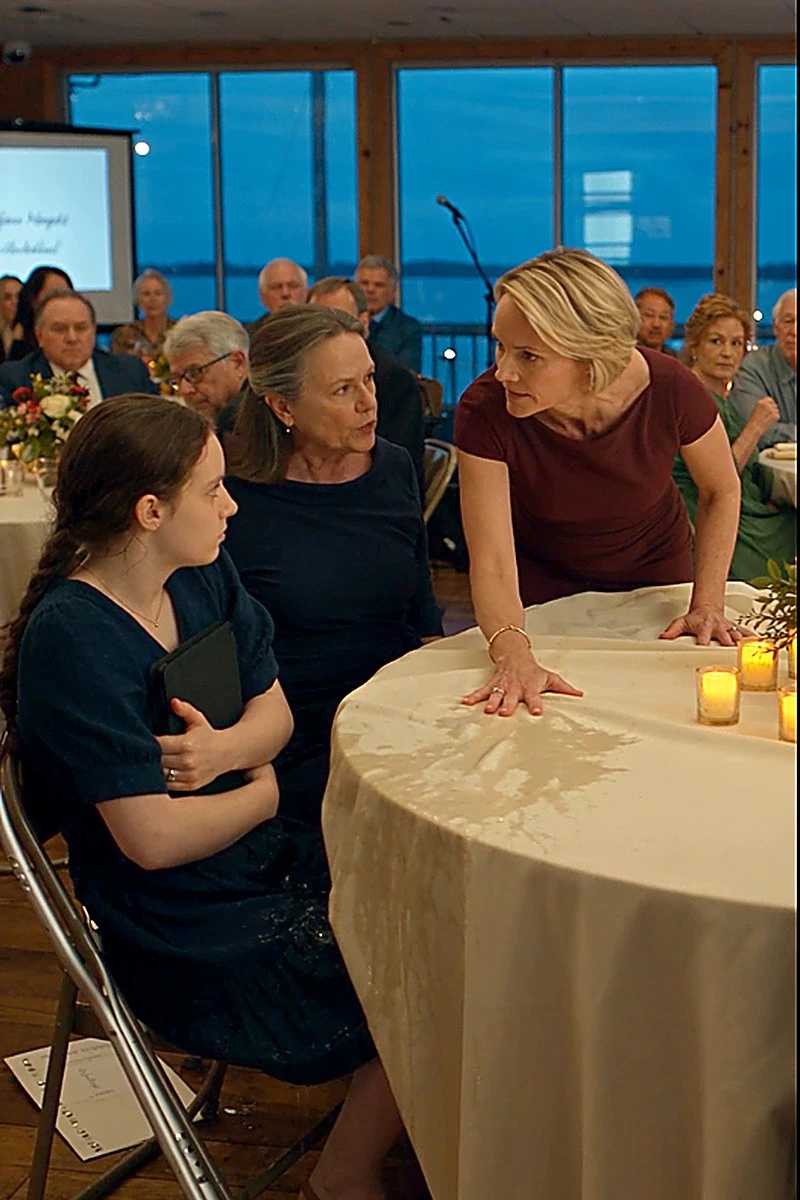
“Say she signed the loan. That’s why we kept the ramp form. Beth will believe you if you stop changing the story.”
Paul’s voice came through the speakers without hesitation.
I knew every part of it.
The patience.
The instruction dressed as reassurance.
Mara kept the track running.
Nora raised her hand.
The playback stopped.
Her tablet said, “Save that with the documents.”
“It’s preserved,” Mara answered.
Tessa sat down.
I looked at Nora.
There was no confusion in her face.
“Are you ready to call Aaron?” I asked.
Her tablet answered, “Yes. I want him to hear it himself.”
* * *
Aaron listened to the copy that afternoon.
Nora sat beside me through the call.
“That instruction supports deliberate fabrication,” he said.
“Does it prove everything?” I asked.
“It belongs with the bank records, the lender’s correspondence, and both versions of the interview.”
Nora’s tablet asked, “What happens next?”
“If you want to report this, we submit the evidence and your account of what happened.”
“I do.”
“Your decision?”
“Yes.”
“Not because Beth wants you to?”
Nora looked at me.
Her tablet answered, “Because they took my money and tried to make my answer disappear.”
Aaron said, “Then we prepare it.”
“Mara’s report covers the files and the comparisons,” Aaron said.
“Tessa supplied her notes about the recorder. Leah supplied the preview messages.”
Nora reviewed her statement.
“Change this,” her tablet said.
I leaned toward the page.
“It says I discovered missing money at the dinner.”
“What should it say?”
“I asked about missing tuition. I had already saved records because the rides did not happen.”
Aaron corrected it.
“Anything else?”
“Keep my words about consent.”
“They’re there.”
She read the paragraph again.
“Can I sign now?”
“Yes. If it says what you mean.”
She signed with her left hand.
“Mine,” she said.
* * *
The first investigator spoke directly to Nora.
I attended because she asked me to.
“Tell me what Dana was authorized to do,” he said.
Her tablet answered, “Pay my legitimate expenses. Keep records. Show them when I asked.”
“Did you authorize payments toward Paul’s business debt?”
“No.”
“Did you authorize a loan?”
“No.”
He waited while she typed the next answer.
I noticed that.
So did Nora.
“Will you take their devices?” her tablet asked.
“We’ll pursue the records and any device evidence through legal process.”
“Will it take time?”
“Yes.”
Nora nodded.
“Then keep me informed,” her tablet said.
* * *
It took weeks before the first detailed update.
Then months before the whole record came together.
Aaron explained each piece as it became available.
“Investigators obtained the bank records,” he said.
“Eighteen payments?” Nora’s tablet asked.
“Eighteen. Two thousand, seven hundred dollars each. Forty-eight thousand, six hundred total.”
“Where did they go?”
“Through Briar to the business lender. The records match the payment allocations Wesley preserved.”
“Any rides?”
“No evidence of transport services for those charges.”
Nora opened her calendar.
Her tablet said, “March twelfth was the last real ride.”
“Yes,” Aaron answered.
“The receipt supports what you told us.”
* * *
With Aaron’s help, Nora sent the full interview to the relatives who had received the clip.
She included a short message.
“Please watch the answer. Do not share my medical information or speak for me.”
The cousin apologized first.
“I should have asked you,” the message said.
Nora read it without replying.
Mrs. Whitaker called next.
“May I apologize to Nora?” she asked.
I turned toward Nora.
Her tablet said, “Not today.”
“She isn’t available for that today,” I answered.
“I understand.”
After I hung up, Nora typed.
“I don’t have to make her feel better.”
“No,” I said. “You don’t.”
* * *
Dana kept asking to speak without lawyers.
Nora kept saying no.
“Until you answer the questions in writing,” her tablet told her.
“You’re making everything official,” Dana said.
“You made official-looking bills.”
“I was under pressure.”
“So was I.”
My sister called me afterward.
“You know what Paul is like when he thinks he’s cornered.”
“You chose to send the payments.”
“I thought he would replace them.”
“You also chose to use her signature.”
“I never wanted this.”
“Nora didn’t either.”
Dana stopped.
I stopped filling that silence with excuses for her.
“Speak to your lawyer,” I said, and ended it.
* * *
“The disputed loan was created three weeks before the dinner,” Aaron said.
“Investigators examined the original files obtained through the legal process.”
“The signature came from the ramp application.”
Nora’s tablet asked, “My saved application?”
“The scan retained among Dana’s records. The signature image was used in the loan document.”
“Not another form I signed?”
“No.”
I looked at the date printed on the alleged agreement.
It claimed an earlier understanding.
“The file history tells another story,” Aaron said.
Nora put her finger beside her name.
Her tablet said, “They made me agree after I started asking.”
“They tried,” Aaron answered.
* * *
“The device evidence answers the question Mara had left open,” Aaron said.
“Paul’s computer contained the editing project for the shortened interview.”
“The findings are in the case record.”
“The export and account activity matched the file later sent to Dana.”
Nora’s tablet asked, “He removed my answer?”
“The project omitted your attribution and denial. The messages and device records corroborate the file’s path to Dana and its distribution.”
“And the recording from the dinner?”
“It supports why they were presenting the fabricated loan.”
I sat back.
Nothing remained for him to arrange around us.
Nora’s tablet said, “Keep everything.”
* * *
Leah made her statement even after Paul asked her not to.
She came over afterward with swollen eyes.
“He said I was helping strangers destroy him.”
“What did you say?”
“That the messages were mine to provide.”
Nora’s tablet asked, “Are you all right?”
“No,” Leah said.
Nora nodded.
“Neither am I.”
Leah sat beside her.
“I still love him.”
“You can,” Nora’s tablet answered.
“I don’t want that to sound like I’m choosing him.”
“You gave the records.”
“I did.”
“That was a choice.”
Leah wiped her face.
For once, none of us tried to make love sound simple.
* * *
Paul asked me to visit before the plea hearing.
I declined and took his call instead.
“Twenty-eight years should count for something,” he said.
“They do.”
“Then don’t end our marriage over this.”
“This was eighteen payments. False invoices. A copied signature. Nora’s answer cut apart.”
“I was afraid.”
“You made her afraid to use her own name.”
“I can change.”
“I hope you do.”
“Beth.”
“I’m still proceeding with the divorce.”
He said nothing.
I looked at the place where his dinner photograph had stood.
I had put it away.
Our daughter could keep her copy.
“Goodbye, Paul.”
* * *
“What was the hardest part of the divorce?” Leah asked.
“Making decisions I hated. Reading forms. Dividing things we chose together.”
“Do you want me to stop visiting him?”
“No,” I said.
“Would it hurt you?”
“Some days.”
“Then how do I do it?”
“Make your own choice. Don’t carry his explanations back to Nora.”
“I won’t.”
“And don’t carry mine to him.”
She nodded.
* * *
The divorce became final before the tenth month.
I read the decree alone.
Then Nora knocked.
Her tablet asked, “Do you want company?”
“Yes,” I said.
She sat without asking me to explain.
“I’m here.”
* * *
“Both pleaded guilty,” Aaron told Nora.
“Paul admitted directing the diversion and using false documents to disguise it.”
“Dana admitted knowingly making the transfers and helping fabricate the loan.”
Nora chose to attend.
Before we entered, her tablet asked, “Will they let me finish?”
“Aaron arranged for your statement,” I said.
“And the pauses?”
“Yes.”
She nodded.
Inside, the paper in her hand shook slightly.
She set it down, using her tablet.
“They called my money help. They called my questions confusion. They called my denial agreement.”
The room stayed quiet.
Nora looked toward them.
“I knew what was mine.”
* * *
Paul received a custodial sentence. Dana received supervised probation. Both were ordered to pay restitution for the diverted money.
Aaron read the order aloud.
“The same loss isn’t collected twice,” he said.
“Payments toward it reduce the amount still owed.”
Nora’s tablet asked, “All forty-eight thousand, six hundred?”
“Yes.”
“Not just the tuition?”
“Not just the tuition.”
“And if it takes time?”
“We keep tracking what is paid and what remains enforceable.”
I watched Paul leave with the officers.
Dana watched, too.
Then she looked toward Nora.
My niece turned to Aaron.
Her tablet said, “Send me the written order.”
* * *
“This recovery comes from Paul’s available assets under the restitution arrangements,” Aaron said.
“A substantial part of the loss. The remaining balance is here.”
Nora read the accounting.
Her tablet asked, “Where are the sources?”
“These entries show the assets and the amounts credited.”
“What remains?”
He pointed.
Nora read it herself.
“Keep sending these,” her tablet said.
“I will.”
“And Dana’s payments?”
“Credited as they arrive.”
I reached forward.
Nora moved the page closer.
“Do you want help keeping track?” I asked.
“Not today,” her tablet answered.
“May I see it later?”
“Ask me later.”
“My account. My records.”
* * *
“Four thousand, eight hundred dollars,” Nora’s tablet said.
“The tuition?” I asked.
“Yes. Check the recipient with me.”
I opened her acceptance email.
“The program name matches.”
“The amount?”
“Four thousand, eight hundred.”
“Then I’m paying it.”
She pressed Confirm.
The receipt appeared.
“Does it say tuition?” her tablet asked.
“Yes.”
“Not transportation?”
“No. Training.”
She saved it.
Then sent it to the coordinator.
“Please confirm my place in the available session.”
The reply arrived that afternoon.
Nora read it twice.
“Paid. Confirmed,” her tablet said.
“How does that feel?”
She smiled, typed.
Her tablet answered, “Like I chose it.”
* * *
“How was the first day?” I asked.
Her tablet answered, “Good. Hard. Long.”
“My hand wouldn’t do what I wanted.”
“Did someone help?”
“Yes. They asked first.”
At home, she dropped a stem onto the worktable.
“I know where it should go. My hand doesn’t,” her tablet said.
“Would you like help?”
“Yes. Hold the container.”
I held it.
She positioned the flowers with her left hand.
“Enough today,” her tablet said.
“Same time tomorrow?”
“Yes. I’m still going.”
I put the container where she pointed.
“Don’t fix it while I’m gone,” her tablet said.
“I’ll wait,” I answered.
“Good.”
* * *
“I’m working regular hours now,” Nora’s tablet said.
“At the greenhouse?”
“Yes. Short shifts first. Longer when I choose.”
“Do you need me to ask about deliveries?”
“I already asked.”
“Of course.”
“I have two arrangement orders.”
“For customers?”
“Yes. People who liked my work.”
“What do you need?”
“A workroom. Shelves I can reach. A table that doesn’t wobble.”
“We can look.”
“I found one.”
I laughed.
Nora’s mouth lifted.
“You can help carry things. I will choose where they go,” her tablet said.
“Yes.”
“No surprise opening party.”
“Who do you want there?”
“You. Leah. That’s enough today.”
* * *
Before we moved anything, I asked Nora for a conversation.
Her tablet answered, “About what?”
“My apology.”
“You already said sorry.”
“I said I was sorry you were hurt.”
“Yes.”
“I need to say what I did.”
She set the tablet down, then picked it up again.
“I believed Dana because listening to you took longer. I let Paul answer because it made my life easier.”
Nora watched me.
“I left you waiting. Even before the dinner.”
“Yes,” she said.
“I should have asked you.”
Her tablet answered, “And waited.”
“And waited.”
She looked at my hands.
“Keep doing that.”
“Do you forgive me?” I asked.
Nora looked toward the window.
Her tablet said, “Some days I am still angry.”
“You’re allowed.”
“I don’t want to make a promise about every day.”
“Then don’t.”
“You did help.”
“After I failed to listen.”
“Yes.”
We sat quietly with that.
I didn’t ask her to soften it.
Her tablet continued.
“You can take me to work Tuesday.”
“I can.”
“Ask what time.”
“What time?”
“Nine.”
“Would you like me to come inside?”
“No. I’ll text when I’m done.”
“I’ll wait for your message.”
She nodded.
It was something I could do correctly.
* * *
Dana’s apology came in writing through the channel Nora had permitted.
It did not begin with what caregiving had cost her.
“I took your money without your agreement. I made false invoices. I used your ramp signature on a loan you did not sign. I shared a recording that left out your denial.”
Nora read it twice.
“Is that everything?” her tablet asked.
“It names what she did,” I said.
“Not why.”
“Do you want to ask?”
“Not today.”
She saved the letter.
Then closed it.
Her tablet said, “I can keep an apology without giving her my account back.”
* * *
Nora chose one brief call with Dana each week.
She set the time herself.
“If she starts explaining why it was necessary, I end it,” her tablet said.
“If she asks about your money?”
“I end it.”
“If she asks about your flowers?”
“I decide what to tell her.”
Dana tried to ask me for more contact.
“Can’t you persuade her?”
“No.”
“I’m still her mother.”
“That means you can listen to what she asked.”
My sister started to cry.
I heard her.
I didn’t carry the tears to Nora.
That evening, Nora’s tablet said, “I told her about my yellow flowers.”
“Was it a good call?” I asked.
Her tablet answered, “Parts of it.”
“That’s enough?”
“For this week.”
* * *
Leah arrived with boxes for the workroom.
“Dad asked whether you were working,” she told Nora.
“Did you answer?”
“I said you were doing well. I didn’t give details.”
Nora considered that.
“You can ask me first next time.”
“I will,” Leah said.
“He’s still my dad.”
“I know,” Nora’s tablet answered.
“He doesn’t get my life through you.”
“No.”
Leah picked up a box.
“Where does this go?”
Nora pointed toward them.
Her tablet said, “With the others. I’ll show you.”
“Do you like the workroom?” Leah asked.
Her tablet answered, “I like the light.”
“And the shelf?”
“Too high.”
“Lower?”
“Yes. Not everything needs to look even.”
We moved it.
I carried containers while Leah unpacked ribbon.
Nora arranged the tools herself.
“Where do you want the scissors?”
“Left.”
“Here?”
“Yes.”
“And these?”
“Beside them.”
“The receipts?”
“In my drawer.”
“May I label it?”
“I already did.”
She opened it.
Inside was a folder marked Orders.
“Yours,” Leah said.
“Mine,” Nora’s tablet answered.
“Will you keep all of them?”
“Yes. Even the ones that don’t work out.”
“Those count, too.”
* * *
“Do you want us here when the customer comes?” Leah asked.
Nora’s tablet answered, “Not this time.”
“Are you nervous?”
“Yes.”
“About the flowers?”
“No. About explaining.”
“Would a written description help?”
“I made one.”
“Would you like me to read it?”
“For spelling,” her tablet said.
I read the description.
“Looks good.”
“So do the flowers,” Leah said.
Nora smiled.
Then glanced toward a chair leaning against the wall.
“Bring that here,” her tablet said.
I picked it up.
Leah reached for her coat.
“Text me later?”
Nora nodded.
Her tablet said, “When I’ve finished. I’ll tell you myself.”
* * *
Ten months after the dinner, I stood quietly in Nora’s workroom, holding her new chair.
“By the window?” I asked.
Her tablet answered, “Turn it a little.”
“This way?”
“Yes. I want to see the door.”
“And the flowers?”
“Those, too.”
“Let me check the floor beneath its legs.”
Just the place she had chosen.
Nora set her tablet beside the order folder.
Her cane rested within reach.
“Here,” she said.
I looked at her, then at the space she had marked for herself.
I put the chair where Nora asked, and this time, I waited for her to sit.
The End.