Chapter 4: The House Was Ready for Me
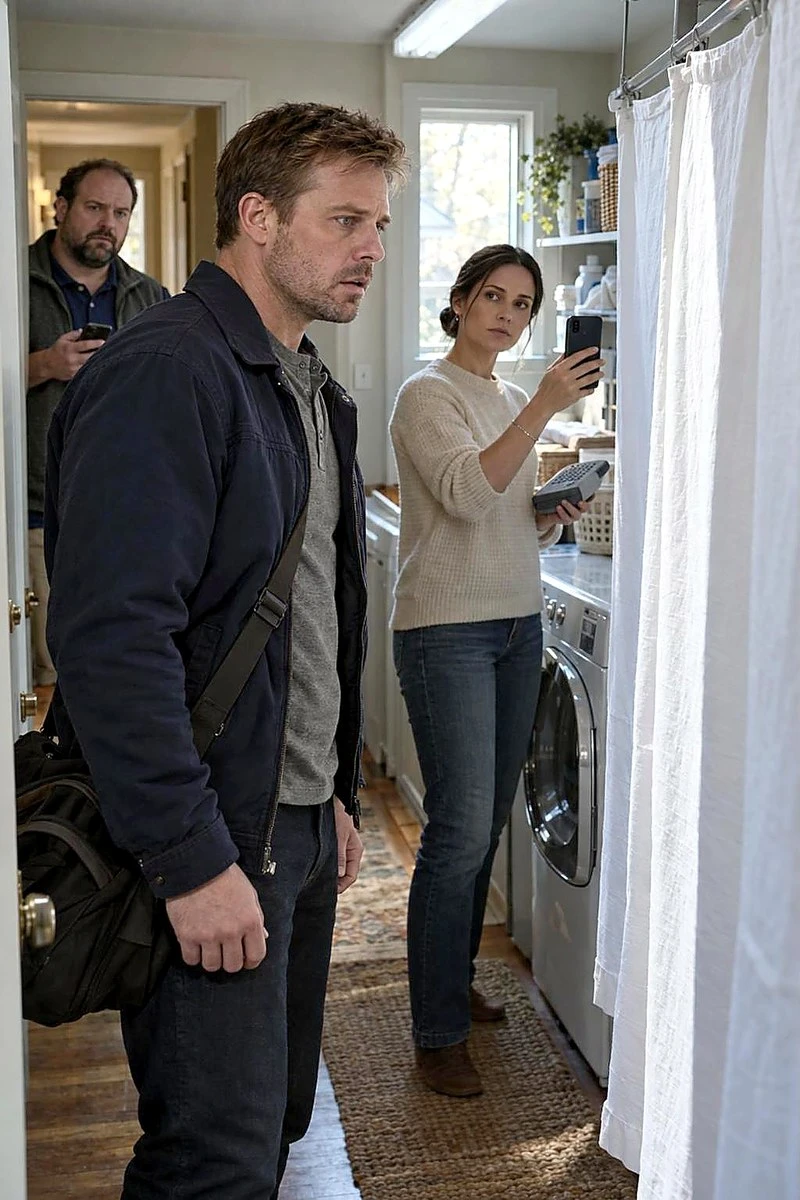
“The return times are mine,” I told Bell. “What are the numbers beside them?”
“Some count what she called resets,” Bell said. “Others correspond to clip entries. There’s a key on another page.”
“Resets,” I repeated.
“That’s the word in the notebook,” Bell said.
I enlarged the photograph.
Under my expected arrival was a short instruction.
Front room ready.
“What does ready mean?” I asked.
“We’re comparing entries with other records,” Bell replied. “There are separate columns for starts and releases.”
“Clock times?” I asked.
“Yes,” Bell said.
I put my free hand against Cora’s doorframe.
“She wrote down when they could come out,” I said.
“That appears to be what those entries record,” Bell replied. “I’ll show you the related pages in person.”
I looked into the kitchen.
Micah was lifting the top slice of bread to check his sandwich. June waited until he put it back.
“They’re eating,” I said.
“Then stay with them,” Bell told me. “We can continue tomorrow. Keep any family updates she sent while you were traveling.”
“The photographs?” I asked.
“Photographs, videos, messages,” Bell said. “Keep the files as you received them. We’ll arrange preservation.”
“I have them,” I said.
“Don’t ask the children to explain the notebook,” Bell told me.
“I won’t,” I said.
He gave me a time to meet him.
I ended the call and turned the screen off.
Cora stood beside the kitchen table.
“What do you need?” she asked.
“I need to sit down with them,” I said.
Cora pulled out my chair.
June looked at my phone.
“Is it Mom?” June asked.
“No,” I told her. “Detective Bell.”
“Do we have to go somewhere?” June asked.
“Not tonight,” I said.
Micah pushed a plate toward me.
“Cora made yours without mustard too,” he said.
I took the plate.
My house had been prepared for my arrival.
I hadn’t known I was the person it was hiding from.
* * *
After the children settled into bed, Cora sat with me at the kitchen table.
Their bedroom door remained open downstairs.
I kept my phone on the wood between us.
“I need to look at some things Celeste sent me,” I told Cora. “I don’t want the children seeing the screen.”
“I can sit facing the stairs,” Cora said.
I opened the first message.
A photograph of June holding a school project filled the screen. Micah sat beside her on the living-room rug.
I remembered receiving it in a motel parking lot.
Celeste’s message beneath it said, All settled. Have a good night.
I opened the next photograph.
Same rug.
Same chair pushed against the wall.
A different shirt on Micah.
“Do you recognize anything?” Cora asked.
“That chair,” I said. “She usually kept it beside the window. It’s against the wall in both pictures.”
“Could it have stayed there?” Cora asked.
“Yes,” I said. “I don’t know yet.”
I set Bell’s notebook photograph beside the messages on the screen.
There were household tasks written between the coded entries.
Clean shirts.
Front room.
Clip.
I pointed without handing Cora the phone.
“The pictures were sent on these days,” I told her.
Cora leaned closer.
“Are those the times they were sent or taken?” she asked.
“Sent,” I said. “Bell will need to check the files.”
I opened a short video.
June and Micah sat on the rug.
June held the school project upright. Micah looked just past the camera.
I stopped it before either child spoke.
Cora watched my hand.
“You don’t have to play it for me,” she said.
“I need to give it to Bell,” I replied.
“You can do that without watching it tonight,” Cora said.
I lowered the volume and closed the video.
Another message sat beneath it.
See? Everybody’s fine.
I placed the phone face down.
“I want to run them again,” I told Cora. “See what I didn’t see the first time.”
“Would that help you identify the files?” Cora asked.
“I don’t know,” I replied.
Cora reached for the empty plate beside my elbow.
“Then leave that question for Bell,” she said. “The children are downstairs. They know where you are.”
“I thought these were good nights,” I said. “She sent the pictures, and I thought they were having good nights.”
“You know what you were sent,” Cora replied.
“I don’t want to hand him only the pictures that look bad now,” I said.
“Give him the thread,” Cora told me. “Let him see the ordinary ones too.”
I turned the phone over and marked the conversation for the meeting.
From downstairs, Micah called my name.
I stood so quickly the chair scraped.
Cora remained seated.
“I’ll keep this here,” she said, touching the phone.
Micah stood in the bedroom doorway with one sock in his hand.
“Where does this go?” he asked.
“On the dresser is fine,” I told him.
June was sitting up in the other bed.
“Will it be wrong there?” she asked.
“No,” I said. “We can move it in the morning.”
Micah put the sock down.
I waited while he climbed back into bed.
June touched her cardigan pocket.
The blue house sat on the bedside table instead.
“Can the door stay like that?” June asked.
“Yes,” I told her.
“All night?” June asked.
“All night,” I said.
I returned to the kitchen.
Cora had moved my chair so it no longer blocked the stairs.
“I didn’t touch the messages,” she told me.
“I know,” I said.
My phone lit up beneath her hand.
Russell.
I answered without putting him on speaker.
“How are they settling?” Russell asked.
“They’re in bed,” I said.
“Cora has everything?” Russell asked.
“For tonight,” I replied.
“I’ve printed the work records you’ll need,” Russell said. “I can bring them in the morning.”
“Which records?” I asked.
“Your job dates, overnight calls, invoices,” Russell said. “You shouldn’t have to chase paperwork while you’re handling this.”
“Bring what you have,” I told him. “Bell is requesting the underlying records too.”
“Of course,” Russell said. “Let’s finish clean. No missing dates, no loose ends.”
I looked at my phone.
That was how he ended job meetings.
Finish clean.
“I’m meeting Bell tomorrow,” I said.
“I can come,” Russell replied.
“I’ll go myself,” I told him.
“Ethan, you don’t have to do everything alone,” Russell said.
“I’ll take the papers,” I replied.
Russell waited a moment.
“First thing tomorrow,” he said.
I ended the call.
Cora looked toward the stairs.
“Do you want me here when he comes?” she asked.
“Yes,” I said.
She nodded.
Then I turned the phone over again.
* * *
Russell arrived after breakfast carrying a document envelope and two coffees.
Cora met him at the front door.
“The children are downstairs,” she told him. “Ethan’s in the kitchen.”
Russell held the coffees out.
“One for you,” he said.
“Set it on the counter,” Cora replied.
Russell put the envelope on the table in front of me.
I opened it.
The papers were clipped into separate groups.
Job confirmations.
Invoices.
Travel summaries.
“You can give Bell the whole thing,” Russell said. “I made myself a copy.”
“I’ll let him decide what he needs,” I replied.
Russell pulled out the chair opposite mine.
I put a hand on the chair back.
“I’m leaving shortly,” I said.
Russell kept his hand on the seat.
“Have they told you more?” he asked.
“They’ve spoken to the appropriate people,” I replied.
“Have you spoken to Celeste?” Russell asked.
“Not since yesterday,” I said.
“She wants her own explanation heard,” Russell said.
“Bell has spoken with her,” I replied.
Russell glanced at Cora.
She remained beside the counter.
“You can leave those with me,” I told him, tapping the papers.
“I’d like to understand what’s happening,” Russell said.
“I don’t have a complete account,” I replied.
“Then be careful about deciding you do,” Russell said.
I took my hand off the chair.
“Is everything in here from the business system?” I asked.
“Everything relevant to your travel,” Russell replied.
“Did you change anything for the printout?” I asked.
“I put it in date order,” he said.
“Where are the client changes?” I asked.
“Attached to the relevant orders,” Russell replied.
“And the actual completion times?” I asked.
“They’re there when the job was closed,” Russell said. “If someone closed an order the next morning, you might need your own notes.”
“Bell asked for dates I could document,” I said.
“Then use the invoices,” Russell replied. “Those are what we billed.”
“They aren’t always when I came home,” I said.
Russell lifted the edge of the envelope.
“Tell him that,” he replied. “Don’t make it look more exact than it is.”
“I’ll give him the records and let him ask,” I said.
Russell released the envelope.
“You’re treating a printout like it’s a trap,” he said.
“I’m treating it like a printout,” I replied.
I turned the first page over.
There was no writing on the back.
“Bell can compare it with the source,” I said.
Russell let go of the chair.
“Do that,” he replied.
Cora opened the front door.
Russell looked down the stairs.
“Could I say hello before I leave?” Russell asked.
“They’re occupied,” Cora said. “We’re giving them a quiet morning.”
“I won’t ask them questions,” Russell replied.
“I’m not interrupting them,” I told him.
Russell looked at me instead of the stairs.
“I’ll tell them you stopped by,” I said.
Russell left.
Cora closed the door without locking it until his truck moved away.
Then she turned the bolt.
I slid the papers back into their envelope.
* * *
Bell met me at a table in an interview room.
A photograph of the blue notebook lay beside his folder.
The real notebook was elsewhere, preserved with the other evidence.
I put Russell’s envelope in front of Bell.
“My brother printed these,” I said. “He handles dispatch.”
Bell wrote that down.
“We’re requesting records directly from the business system,” he told me. “These can help us identify what to compare.”
I handed him my phone.
“The family updates are here,” I said.
Bell brought in a staff member to arrange the documented collection of the relevant messages and attachments.
I stayed while they explained what they were preserving.
“Will I get my phone back today?” I asked.
“Yes,” the staff member said. “We’re collecting the specified material. You’ll receive a record of it.”
Bell turned the notebook photographs toward me.
“This column is your expected arrival,” he said. “The next pages include instructions for what should happen before it.”
I read the first one.
Fresh shirts. Front room. No laundry in frame.
I looked up.
“She wrote that before taking the pictures,” I said.
“We’re checking the sequence,” Bell replied.
He placed a family photograph beside the notebook page.
The dates matched.
So did the shirts.
“You received this after the preparation entry,” Bell said.
“While I was in Iowa,” I told him.
Bell placed another photograph beneath it.
The same chair stood against the wall.
June’s school project rested on her knees.
I touched the edge of the paper.
“She sent this while I was eating dinner,” I said.
“Do you remember the message?” Bell asked.
“Everybody’s fine,” I replied.
Bell added the received-message record.
The words were there.
My phone wasn’t inventing them.
My memory wasn’t making them worse.
Bell turned to another notebook page.
“There are start and release entries on days you were away,” he said. “The preparation notes follow them.”
I kept my eyes on the headings.
Not the values.
“Was it planned before she started?” I asked.
“Some entries include tasks recorded in advance,” Bell replied. “The related messages are being reviewed.”
“So this wasn’t a bad afternoon,” I said.
“No,” Bell replied. “The evidence indicates a repeated, organized practice.”
I pulled my chair closer to the table.
“Tell me what you know,” I said. “Not what you think I can handle.”
Bell looked at the papers before answering.
“The children’s separate accounts, school records, travel records, and this notebook are consistent in important ways,” he said. “There are still details to verify.”
“How far back does the notebook go?” I asked.
“About eight months,” Bell replied.
I pressed my palms against my knees.
Eight months did not fit inside the room.
Bell waited.
Then he pointed to a row of clip identifiers.
“These correspond to updates you received,” he said. “There are references we haven’t matched yet.”
“What kind of references?” I asked.
“More numbered clips,” Bell said. “We’re establishing their source and what was retained.”
I looked at the small strings of letters and numbers.
They could have been parts on an invoice.
That was how neatly she had written them.
“Do you need me to watch the videos?” I asked.
“Not all of them today,” Bell replied.
“What do you need?” I asked.
“Identify the updates you received and the trips they relate to,” he said. “The children don’t need to do that work.”
I reached for the first photograph.
The staff member returned my phone while Bell gathered the notebook copies.
“I’ve documented the collection,” she told me.
I checked the screen.
Cora had sent one message.
Lunch here whenever you’re finished.
I replied that I would be back soon.
Bell opened another folder.
“There’s something else,” he said.
I stopped typing.
“Messages from your wife’s phone are being preserved under the investigative authorization,” Bell said. “We’re reviewing the relevant thread and its account information.”
“To whom?” I asked.
“The contact is saved as Route Desk,” Bell replied.
I put my phone down.
“That’s the business dispatch contact,” I said.
“Who uses it?” Bell asked.
“It routes through the office,” I said. “It’s a shared contact. I don’t usually use it when I’m on the road. I call whoever’s covering.”
“We’re verifying access and sender records,” Bell said.
“What was she asking them?” I asked.
Bell placed a printed exchange on the table.
Celeste had asked whether my return could be moved.
A work order number followed.
I recognized the client.
“Did the job require another night?” Bell asked.
“I’d need to see the full order,” I said. “That client sometimes changed the scope.”
Bell nodded and marked the number.
“Was that sent before the trip?” I asked.
“Before the proposed change,” Bell said. “The thread has externally recorded times. That helps us compare it with the notebook.”
“The notebook could have been written afterward,” I said.
“Some entries could,” Bell replied. “We don’t date a decision just because someone wrote a date beside it.”
“Then how do you know it was planned?” I asked.
“Requests made in advance, followed by matching updates and records,” Bell said. “We compare the sources. We don’t make the notebook prove everything by itself.”
I pulled the work order closer.
“Do you recognize this request?” he asked.
“I wasn’t included in it,” I replied.
The next message mentioned the house being ready.
I looked back at the notebook photograph.
Same date.
“Why would she tell dispatch that?” I asked.
Bell didn’t answer immediately.
He put a second page beside the first.
“This thread went beyond arranging work,” he said.
I kept my hands away from the papers.
“What does that mean?” I asked.
“It referred to what she was preparing at home,” Bell said. “We’re preserving the full exchange, including the messages around the scheduling request.”
“Could somebody have thought she meant cleaning?” I asked.
“Some messages could read that way in isolation,” Bell replied. “The surrounding conversation matters.”
He tapped a line above the scheduling request.
“This message refers to keeping the laundry sheets up until a clip was finished,” Bell said.
I looked at the notebook photograph.
“That isn’t cleaning,” I said.
“No,” Bell replied.
I moved the notebook photograph so both dates were visible.
The sender had known when I would return.
Celeste had written what needed to happen before I did.
I looked toward the closed door.
“Did they know about the children?” I asked.
Bell placed the final page in front of me.
“Read this reply,” he said.
The reply from Route Desk read, ‘I’ll keep him out another night. Finish clean before he gets home.’