Chapter 5: My Brother Had the Schedule
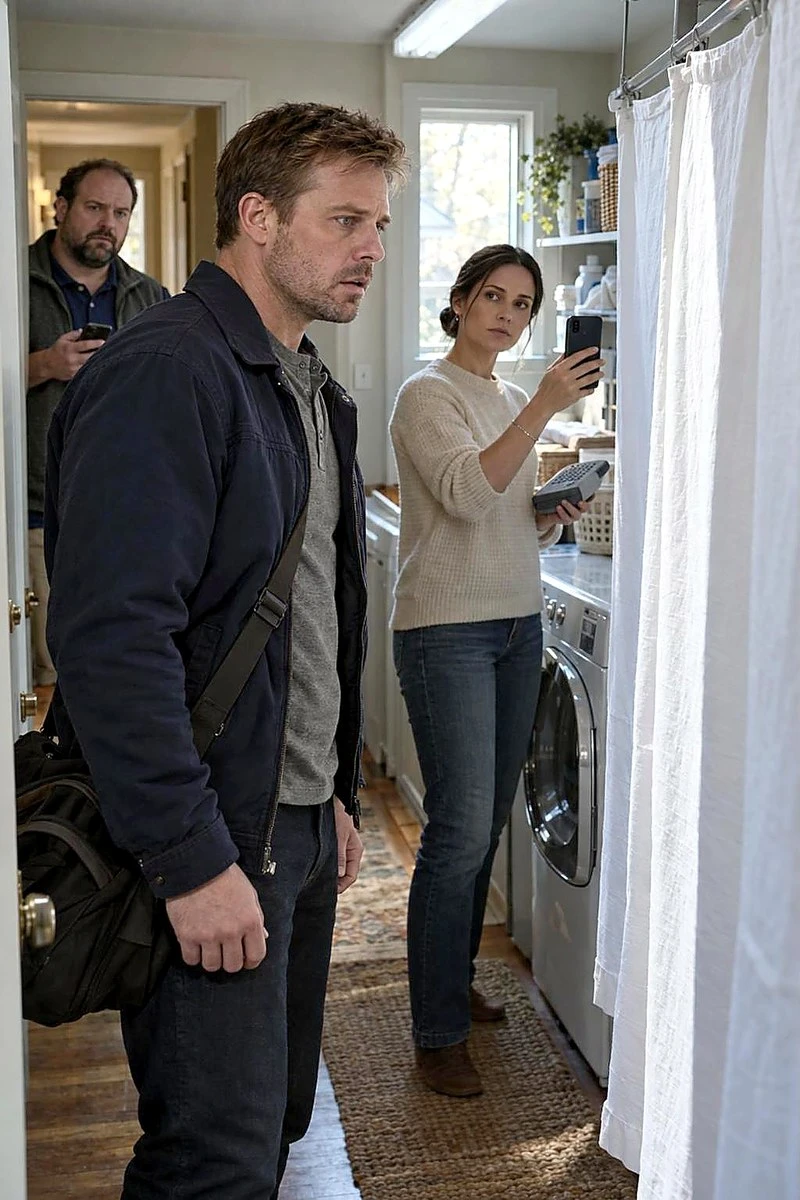
“Finish clean,” I said.
Bell kept the page in front of me.
“Who sent it?” I asked.
“The records tie that session to Russell’s assigned device and office login,” Bell replied. “The dispatch changes were made under his account too.”
“My brother,” I said.
“Yes,” Bell replied.
I looked at the reply again.
Russell had said the same words on Cora’s kitchen phone call.
Then he had arrived with coffee.
“Could somebody else have used his login?” I asked.
“We’re checking access,” Bell said. “We’re not relying on the phrase. There are device records, matching transactions, and changes to your assignments.”
Bell placed a work order beside the message.
“The client confirmed the work hadn’t expanded,” he said. “Your return was moved after Celeste requested another night.”
I touched the original completion date.
“That was supposed to be a day job,” I said.
“The additional overnight assignment was entered afterward,” Bell replied.
“By Russell,” I said.
“Under his account,” Bell replied. “We’ll establish responsibility through the records and his account of them.”
I pushed the printout away.
“The last client canceled,” I said. “That’s why I came home early.”
“Do you have the cancellation message?” Bell asked.
“Yes,” I replied.
“We’ll preserve that too,” Bell said. “It helps establish how your arrival differed from what was expected.”
“So the extra night wasn’t something I imagined,” I said.
“No,” Bell replied. “The schedule shows it. The question is why it was added and what the person making the change knew.”
I took out my phone and found the cancellation.
The client had apologized for the inconvenience.
I turned the screen toward Bell.
“Show me what he knew,” I said.
Bell turned to the surrounding messages.
Celeste had referred to the laundry sheets.
The response discussed keeping the children out of view until the update was ready.
Another exchange referred to the approval card.
I read it twice.
“He knew about my initials,” I said.
“The exchange indicates he knew the card was being used to represent your approval,” Bell replied.
I stood.
The chair struck the wall behind me.
Bell didn’t stand with me.
“Where are you going?” he asked.
“I need to get back to the children,” I said.
“Tell Cora about the contact concerns,” Bell replied. “The coordinating team needs to update the arrangements too.”
“Can he pick them up?” I asked.
“You can make clear that you haven’t authorized him to,” Bell said. “We’ll communicate the investigative concerns through the appropriate channels.”
“He offered pickups outside my house,” I said.
Bell waited.
“He knew which calls to make,” I continued. “He wanted me beside his truck. He wanted a minute without them.”
I put both hands on the table.
My brother had stood beside the ambulance.
I had looked at him and seen help.
Bell slid the papers into his folder.
“I need your account of those interactions,” he said.
I sat down again.
* * *
I called Cora from the station parking lot.
“Russell isn’t to come inside,” I told her. “He isn’t picking up the children.”
Cora stopped speaking.
Then I heard a door close on her end.
“What happened?” she asked.
“Bell has records connecting him to Celeste’s messages and changes to my trips,” I said.
“Did he know?” Cora asked.
“The messages say he did,” I replied.
Cora breathed out.
“I’ll keep the children with me,” she said. “What do I tell them?”
“Where they are and who’s coming,” I said. “I’ll speak with the team about the rest.”
“I won’t ask them about Russell,” Cora told me.
“Thank you,” I said.
My phone vibrated with another call.
Russell.
“I need to take this,” I told Cora.
“Ethan,” Cora said, “keep them out of whatever happens next.”
“I will,” I replied.
I answered Russell.
“Did the records help?” he asked.
“Yes,” I said.
“Good,” Russell replied. “Are you coming to the office? There are things we need to cover.”
“I can meet you there,” I said.
“Bring the printouts if Bell doesn’t need them,” Russell told me.
“He’s keeping them,” I replied.
* * *
I drove to the office without passing Cora’s street.
Russell stood behind the front counter with a stapled work order in his hand.
He looked at the door when I entered.
“Coffee?” he asked.
“No,” I said.
Russell placed the work order in a tray.
“Sit down,” he told me.
I stayed on the customer side of the counter.
“Why did you keep me away another night?” I asked.
Russell rested his hand on the tray.
“Which job?” he asked.
“The one Celeste requested through Route Desk,” I said.
Russell looked toward the open office door behind him.
Then he closed it.
“I was trying to give the household some breathing room,” he said.
“The household,” I repeated.
“You were tired,” Russell said. “She was handling things. I knew you’d come back and walk straight into an argument.”
“About the children behind the sheets?” I asked.
Russell put the tray farther from the edge.
“I understood it as a time-out,” he said.
“Then why did you tell her to keep them out of view?” I asked.
Russell looked at me.
“Because you would misunderstand,” he replied.
“Tell me what you understood,” I said.
“Children step away when they can’t settle,” Russell said. “Their mother brings them back when they’re ready.”
“Did you know where they stepped away?” I asked.
“She said the laundry room,” Russell replied.
“Behind the sheets?” I asked.
“Yes,” he said.
“Did you know what the label maker meant?” I asked.
Russell reached for a pen.
I put my hand on the counter between us.
“Answer me,” I said.
Russell left the pen where it was.
“She used it as a signal,” he replied.
“You knew the sound sent them there,” I said.
“Celeste explained the routine,” Russell replied.
“How long ago?” I asked.
“Months,” Russell said.
“How many?” I asked.
“About six,” he replied.
The counter stood between us.
It was barely wide enough for an invoice.
I kept my hand on it.
“Did you tell her to use my initials?” I asked.
“I didn’t make the card,” Russell replied.
“That wasn’t my question,” I said.
Russell’s jaw moved.
“I told her the children needed to understand that both parents expected the same thing,” he said.
“Did you know I hadn’t agreed?” I asked.
“You expected them to listen,” Russell replied.
“Did you know I hadn’t agreed to this?” I repeated.
Russell looked away first.
“I knew you hadn’t discussed the details,” he said.
“You helped her pretend I had,” I replied.
“I was trying to keep it consistent,” Russell said.
I stepped back from the counter.
“You changed my jobs so she could keep doing it,” I said.
“I gave her time,” Russell replied. “I kept you earning. That contract kept this business alive.”
“The client hadn’t added work,” I said.
“There was always work somewhere,” Russell replied. “I put you where we needed you.”
“Where she needed me,” I said.
Russell folded his arms.
“We had crews depending on that contract,” he said. “You weren’t the only person I had to think about.”
“June was eight,” I replied. “Micah was five. You thought about how to keep them out of my sight.”
“I thought their mother could handle her own children,” Russell said.
“Then why did she need your help hiding it?” I asked.
Russell looked down at the counter.
The invoice tray sat between his elbow and the wall.
I had built that counter with him before we hired our first employee. He had held one end while I checked the level.
There had been room for both of us then.
“You could have called me,” I said.
Russell lifted his eyes.
“You liked the extra money,” he said.
“I didn’t know what you were buying with my nights,” I replied.
Russell glanced toward the window.
A truck passed outside.
Neither of us moved.
“She said they needed firm boundaries,” Russell said.
“You told her to hide those boundaries from me,” I replied.
“I told her to finish clean,” Russell said. “Have the house settled before you got home.”
I looked at his desk through the closed door’s glass panel.
My family photograph stood beside his monitor.
June had a missing front tooth in it. Micah wore a paper birthday crown.
“Don’t go to Cora’s house,” I told Russell.
He dropped his arms.
“You can’t decide I’m dangerous from a few messages,” he said.
“I can decide who comes near my children,” I replied.
“I’m their uncle,” Russell said.
“I know exactly who you are,” I told him.
Russell picked up his phone.
“Let’s talk when you’ve calmed down,” he said.
“Keep your messages,” I replied. “Keep the records. Bell needs them.”
“You think I’m going to erase something?” Russell asked.
“I’m telling you what he needs,” I said.
Russell put the phone down.
“There are records you haven’t seen,” he told me.
“Give them to Bell,” I replied.
Russell held my gaze.
“I will,” he said.
I left without touching the door behind the counter.
* * *
I called Bell from my parked truck.
“I spoke to Russell,” I said.
Bell asked where I was.
“Outside the office,” I replied. “The children are with Cora.”
“What did he say?” Bell asked.
I gave him the conversation as closely as I could.
I distinguished what Russell had said from what I had accused him of.
Bell stopped me twice to clarify a phrase.
“Did he say six months?” Bell asked.
“About six,” I replied.
“And he said he knew you hadn’t discussed the details?” Bell asked.
“Yes,” I said.
“Write down your recollection now,” Bell told me. “We’ll take a formal account. Don’t have another case conversation with him.”
“He said there were records I hadn’t seen,” I told Bell.
“He can provide them through us,” Bell replied.
“I told him not to go near the children,” I said.
“The coordinating team has been informed,” Bell replied. “We’re addressing access to relevant business records through the investigative process.”
“Does that mean he can’t change them?” I asked.
“It means preservation and access are being handled formally,” Bell said. “Don’t alter the system yourself.”
I looked at the office window.
Russell stood behind it.
He wasn’t looking at me.
He was looking at his phone.
“I’m leaving,” I told Bell.
“Go back to the children,” Bell said.
I started the truck.
* * *
The attorney who had drawn up our business agreement called me that afternoon.
I took the call in Cora’s front room.
“An outside administrator can handle the scheduling under an interim arrangement,” the attorney told me. “Relevant records must remain preserved.”
“I don’t want Russell moving my assignments,” I said.
“Then we’ll document how they’re handled while this is addressed,” the attorney replied. “You still have contracts to fulfill.”
“I’m not leaving the children overnight,” I said.
“That limits the work you can take,” the attorney replied.
“I know,” I said.
“There will be costs,” he told me. “Administration, reassignment, and whatever work you can’t retain.”
I looked at Cora’s front door.
Russell had brought two coffees through it that morning.
“Put the arrangement in writing,” I said.
The attorney explained what required review and agreement.
I wrote it down.
It wasn’t a clean break.
My brother’s name remained on the company.
His access to me did not.
Cora came into the room after I ended the call.
“Can you still work?” she asked.
“Some,” I said. “Not the way I was.”
“What do you need tonight?” Cora asked.
“To make tomorrow smaller,” I replied.
Cora sat on the arm of a chair.
“Tomorrow can be breakfast and the care appointments,” she said. “We can start there.”
“I also need someone handling the family side,” I said. “The business attorney can’t do that.”
“Do you have a name?” Cora asked.
“Nina Calder,” I replied. “The coordinating worker gave me a referral list.”
“Call while I’m here,” Cora said.
I called Nina’s office and gave my name.
An assistant took the immediate information and arranged a consultation.
I wrote the time on the back of an unused envelope.
Then I crossed it out and put it in my phone instead.
Cora waited without asking why.
“I don’t want to miss it,” I told her.
“You’ve recorded it,” Cora said. “We’ll make sure you get there.”
I opened the written contact plan.
The coordinating worker called while I was reading it.
We confirmed that Russell was not an approved pickup or visitor.
I sent the updated information to the school through the agreed channel.
Then I put my phone down.
For once, work had to wait.
* * *
June stood beside the kitchen table when I came in.
Micah was making a line of crackers along his plate.
“Is Uncle Russell coming?” June asked.
“No,” I told her.
“He said he could pick us up,” June said.
“I’ve arranged who will do that,” I replied. “Right now, it’s me or Cora.”
June put the blue house beside her plate.
“What if he comes anyway?” she asked.
“The adults will handle it,” I said. “You don’t need to answer the door.”
Cora moved the grocery bag off a chair.
“You can come find me,” Cora told June. “Or your dad.”
Micah broke a cracker in half.
“Are you going to work far away?” he asked me.
“Not tomorrow,” I said.
“After tomorrow?” Micah asked.
“I’m changing the work arrangements,” I told him. “I’ll tell you before I leave and when I’ll be back.”
June looked at my phone.
I moved it away from the table.
“I’m here for lunch,” I said.
Micah pushed the cracker halves together.
I sat down.
Cora brought the plates.
Nobody asked June to keep Micah settled.
When he spilled his water, Cora reached for the towel.
I stayed in my chair.
June stayed in hers.
* * *
Bell called the next morning.
“Russell attended an interview,” he told me. “His account has been documented. He acknowledged knowing the location and the signal.”
I stood beside Cora’s coat hooks.
“Did he call it a time-out?” I asked.
“Yes,” Bell said. “We questioned that explanation against the messages.”
“Did he admit changing the assignments?” I asked.
“He acknowledged making changes,” Bell replied. “We’re checking his account against the audit history and client records.”
“Then he can’t make this sound like a misunderstanding,” I said.
“His explanation doesn’t replace the evidence,” Bell replied.
Bell paused.
“He also supplied an audio file,” he said.
I looked toward the kitchen.
Cora was clearing breakfast dishes.
“What audio file?” I asked.
“He says it supports his claim that you endorsed Celeste’s authority,” Bell replied. “I’d like you to hear it and identify whether it’s your voice.”
I put my hand around an empty coat hook.
“He helped her use my initials,” I said.
“This is a separate item,” Bell replied. “We’ll establish its source and context.”
“I’ll come in,” I told him.
* * *
Bell had a small speaker on the table when I entered the interview room.
A written evidence record lay beside it.
“Russell provided an export,” he told me. “It’s short. We’re preserving what he supplied and seeking the related material.”
“Did he say when it was recorded?” I asked.
“He gave us a date,” Bell replied. “I want your identification before we discuss the rest.”
I sat.
Bell moved the record so I could see it without reaching across the speaker.
“What am I identifying?” I asked.
“The voice,” Bell said. “Then anything you recognize about the recording.”
“He’s saying I agreed,” I said.
“That’s his claim,” Bell replied.
I placed my phone on the table.
The screen lit up with Cora’s message.
We’re here. Take your time.
I turned it face down.
Bell put one hand beside the playback control.
“Are you ready?” he asked.
I nodded.
He pressed play.
My own voice came out of Bell’s speaker: ‘I trust you. Handle it.’