Chapter 6: The Part I Didn’t Listen To
“That was me,” I said.
Bell stopped the recording.
“Do you remember sending it?” he asked.
“I remember saying it,” I replied. “I need the date.”
Bell turned the evidence record toward me.
Four months earlier.
I picked up my phone and opened the message thread with Celeste.
The date took me past photographs, grocery questions, and a reminder about a school form.
Two voice messages sat together.
Hers first.
Mine underneath.
“That’s the exchange,” I told Bell.
“Don’t forward it or change anything,” Bell said. “We’ll preserve the messages from their source.”
“I can play it here?” I asked.
“Yes,” Bell replied.
I put the phone on the table and opened Celeste’s message.
Her recorded voice filled the space between us.
“June won’t settle,” Celeste said in the recording. “She says she’s waiting for you. I need you to back me up on bedtime.”
A smaller voice interrupted her.
“Dad, ask her to put the machine away,” June said in the recording.
Celeste spoke over the end.
“She’s upset about the label maker,” Celeste’s recorded voice said. “Please send something I can play for her. I need us to be consistent.”
The message ended.
I left my finger against the screen.
Bell waited.
“She asked about bedtime,” I said.
“That’s in the message,” Bell replied.
I opened my reply.
The first words were the ones Russell had supplied.
Then my recorded voice continued.
“Bedtime doesn’t change because I’m away,” I said in the recording. “Tell June I’ll call in the morning.”
I stopped playback.
“He left out what I was answering,” I said.
“Russell supplied your outgoing message without the preceding message,” Bell replied. “We’ll document the full sequence.”
“I didn’t agree to hiding them,” I said.
“What did you intend your reply to mean?” Bell asked.
“That bedtime was bedtime,” I replied. “That she didn’t have to wait for me.”
Bell wrote that down.
I stared at Celeste’s message.
June had asked about the machine.
I remembered hearing her.
“I didn’t finish listening the first time,” I said.
Bell looked up.
“How much did you hear?” he asked.
“Enough to hear June,” I replied.
“What happened then?” Bell asked.
“I was outside a mechanical room,” I said. “Somebody opened the door. I stopped the message and sent my answer.”
“So you heard her request,” Bell said.
“Yes,” I replied.
“Did you follow up about it?” he asked.
“No,” I said.
The phone stayed on the table.
There was no missing file to blame.
No broken speaker.
I had heard my daughter and answered my wife.
“I thought she was annoyed by it,” I said. “The label maker. I decided that was what she meant.”
“Did anyone tell you that?” Bell asked.
“No,” I replied.
Bell put his pen down.
“We’ll preserve your account and the exchange,” he said. “Your intention and what you failed to ask are both part of it.”
I looked at the playback button.
I didn’t press it again.
* * *
At Cora’s house, I laid the message dates beside my work calendar.
Cora set a cup near my elbow.
“Did the file turn out to be yours?” she asked.
“Yes,” I replied.
“What did it mean?” Cora asked.
“Something ordinary in my head,” I said. “Something useful to Celeste.”
Cora waited.
“I heard June ask me to have the machine put away,” I told her. “I answered without asking why.”
Cora pulled out a chair.
“Have you told Bell?” she asked.
“Yes,” I said.
“Then he has the record,” Cora replied.
“I have the memory now,” I said.
I opened an older photograph on my phone.
Micah stood beside the front counter at our office.
Someone had been labeling a box of replacement parts.
I remembered Micah covering his ears.
Celeste had said machinery bothered him.
I had moved the box.
I hadn’t asked about the sound.
“That one?” Cora asked.
“I remember what happened around it,” I said. “The photograph doesn’t show the whole thing.”
“Keep that distinction,” Cora replied.
I scrolled beneath the photograph.
There was a message I had sent Celeste after the office visit.
“Micah really didn’t like that noise. Has he been doing that at home?” I read aloud.
Her reply was still there.
“He gets worked up about machinery. He’ll grow out of it,” I read from Celeste’s message.
I had answered with a question about dinner.
“I asked her,” I told Cora.
“About the sound?” Cora asked.
“Yes,” I said. “Then I let her answer stand.”
I turned the screen so she could read it.
“That shows the exchange,” Cora said.
“It doesn’t show what I could have asked Micah,” I replied.
Cora kept her hands away from the phone.
“Write that down too,” she said.
I wrote down what I remembered separately from what the photograph established.
Then I found a message from Celeste about June wanting to show me her school folder.
That brought back the question.
Had I read their plan?
I had said I would look at her school things when I got home.
“The quiet plan,” I told Cora. “She was asking whether I’d read it.”
“You didn’t know which plan she meant,” Cora said.
“I didn’t find out,” I replied.
Cora moved the cup away from the papers.
I wanted her to tell me these were easy mistakes.
She didn’t.
She stayed.
I wrote down June’s question as a recollection, not a quotation I could prove.
Then I sent Bell a message asking how to provide the additional information.
My phone lit up with a work notification.
I turned it over.
* * *
Two weeks later, Dr. Marisol Vega met with me before seeing the children.
Her office had a low shelf of toys and a table clear of papers.
She placed my account of the voice messages face down.
“I’m here to help them stabilize,” Dr. Vega said. “Their therapy isn’t a rehearsal for the case.”
“I understand,” I told her.
“Do you?” Dr. Vega asked.
I looked at the paper.
“I want to know whether they believe me,” I said.
“About what?” she asked.
“That I didn’t agree,” I replied. “That they can tell me things.”
Dr. Vega rested her hands on the table.
“You can make that clear,” she said. “You can’t require them to reassure you.”
“I don’t want June thinking she explained it badly,” I said.
“Then tell her whose responsibility it was,” Dr. Vega replied.
“Mine,” I said.
“Yes,” she replied.
I rubbed the edge of the chair seat.
“How much do I tell them?” I asked.
“Enough to correct what they were led to believe,” Dr. Vega said. “Not enough to make them carry the investigation or your guilt.”
She moved my paper farther aside.
“What would you say?” she asked.
I looked toward the closed door.
“That I should have listened,” I said.
Dr. Vega nodded.
“Start there,” she told me.
* * *
Later, with Dr. Vega present, I sat across from June and Micah.
Micah turned a toy wheel with one finger.
June held the blue house.
“I need to tell you something,” I said.
June looked up.
“I didn’t agree to what happened in the laundry room,” I told them. “But there were things I should have asked about, and I didn’t.”
June tightened her hand around the house.
“I should have listened better,” I said. “That was my responsibility.”
“Did I explain it badly?” June asked.
“No,” I told her.
“Because I asked about the plan,” June said.
“I remember,” I replied. “I should have stopped and asked what you meant.”
June looked at Dr. Vega.
Dr. Vega stayed seated.
“You didn’t have to find better words,” I told June. “You were asking your dad. I needed to pay attention.”
Micah stopped the wheel.
“Are you in trouble?” he asked.
“The adults are working through what happened,” I said. “You don’t have to take care of that.”
June put the house on the table.
“Are you sad at me?” she asked.
“No,” I told her. “You haven’t done anything wrong.”
June watched my face for a moment.
Then she moved the house back beside her knee.
I didn’t ask whether she believed me.
Micah pushed the toy wheel across the table.
“Can I still miss Mom?” he asked.
“Yes,” I told him.
“Even here?” Micah asked.
“Even here,” I replied.
Dr. Vega moved the toy back within his reach.
“You can have more than one feeling,” she told him.
Micah touched the wheel.
I kept my hands on my own knees.
His question wasn’t a request to go home.
I needed to hear the question he had actually asked.
* * *
At the next parent meeting, Dr. Vega asked about the blue house.
“They both use it,” I said. “June carries it more now.”
“Would a simple signal help when words are difficult?” Dr. Vega asked.
“What kind of signal?” I asked.
“Something they choose,” she replied. “Something you answer consistently. It needs to invite help, not become another rule they can fail.”
I looked at the empty table.
“They could put the house where I can see it,” I said.
“What would you do?” Dr. Vega asked.
“Stop and look at them,” I replied.
“And then?” she asked.
“Ask whether they want help or company,” I said.
Dr. Vega nodded.
“Keep it simple,” she told me. “And keep listening when they use words too.”
“What if I’m in the middle of something?” I asked.
“Tell them what you’re doing and when you can respond,” she said. “Don’t promise an impossible response. Make the response dependable.”
I wrote down only three words.
Pause. Company. Help.
Dr. Vega turned the paper toward me.
“Explain it to them,” she said. “Then give them time to decide whether they want it.”
* * *
I explained the idea at Cora’s kitchen table.
Micah touched the house’s blue roof.
“Can I put it by your plate?” he asked.
“Yes,” I told him.
“Even if June has it first?” Micah asked.
“We can make sure you both have a way to ask,” I said. “You can always use words or come get me.”
June kept her hands beneath the table.
“What if you’re on the phone?” she asked.
“I’ll tell the person I need a moment,” I replied.
“What if it’s work?” June asked.
“I’ll still respond,” I said. “If I need a little time, I’ll tell you.”
“Do we have to say why?” June asked.
“You can start with the house,” I said. “We’ll work out what you need together.”
Micah pushed it toward my plate.
I put down my fork.
“Do you want help or company?” I asked.
Micah smiled at the toy.
“I wanted to see,” he said.
“That’s okay,” I told him.
June watched me pick up the fork again.
* * *
Later that afternoon, I stood at the counter reading a letter from the business administrator.
June placed the house beside my elbow.
I lowered the letter.
“Do you want me to pause?” I asked.
June nodded.
I set the paper face down.
We stood without talking.
Cora was helping Micah find a missing puzzle piece in the front room.
“Do you need help with something?” I asked June.
June shook her head.
“Company?” I asked.
She nodded again.
“Okay,” I said.
I stayed beside her.
June picked up the house.
Then she put it down again.
I kept the letter on the counter.
“Still here,” I told her.
June looked toward the front room.
“Can you sit where I can see you?” she asked.
I pulled out a kitchen chair.
“Here?” I asked.
June nodded.
I sat.
My phone started ringing on the counter.
June looked toward it.
It was a client whose appointment had been reassigned.
I reached for the phone, then stopped.
“I’m going to silence that,” I told June. “I’ll stay in this chair.”
She watched my hand.
I silenced the call and put the phone beside the letter.
“Did I make you miss it?” June asked.
“I chose to let it ring,” I replied.
“Will you be in trouble?” she asked.
“I’ll call back when I can,” I told her. “That’s mine to handle.”
Cora appeared in the front-room doorway holding the puzzle box.
“Found the piece,” she said.
June turned toward her.
“Can he finish without me?” June asked.
“Micah can finish with me,” Cora replied.
June stayed beside the chair a little longer.
The letter stayed unread until she took the house away.
I called the client back from the same chair.
“Can you cover tomorrow night?” the client asked.
“I can cover a daytime appointment,” I replied. “Someone else will need to handle the overnight work.”
“We booked you,” the client said. “We need one person following it through.”
“I can give the administrator my notes,” I said. “You’ll have a proper handoff.”
“Is that a firm answer?” the client asked.
“Yes,” I replied. “I’m available locally during the day. I can’t take the overnight assignment.”
“Then send the notes,” the client said. “We’ll discuss whether the remaining work stays with your company.”
“I understand,” I replied.
I ended the call and opened the handoff form.
* * *
Three weeks after the discovery, I met Nina Calder in her office.
We had already spoken about the temporary arrangements, the investigation, and my business changes.
That morning, I brought the updated records.
Nina placed them beside the notes from our earlier consultation.
“Tell me what changed,” she said.
“Russell acknowledged knowing the location and the signal,” I replied. “Bell has the interview and dispatch records.”
“And the voice message?” Nina asked.
“The full exchange is being preserved,” I told her. “My reply was about bedtime. June’s request was in the preceding message.”
“Did you hear her at the time?” Nina asked.
“Yes,” I said.
Nina wrote that down.
“I didn’t ask why,” I added.
“We’ll state that accurately,” Nina replied.
“I don’t want to call it a misunderstanding and leave it there,” I said.
“Then we won’t,” Nina told me. “We’ll distinguish what you knew, what you intended, and what you failed to investigate.”
I gave her the contact-plan updates.
Nina checked the names.
“Who is handling appointments?” she asked.
“I am,” I replied. “Cora helps with transportation.”
“Work?” Nina asked.
“Local assignments when they fit,” I said. “No overnight travel.”
Nina placed the records in order.
I took my keys out while looking for the folded appointment note in my pocket.
The house key landed on her desk.
I moved it away from the children’s papers.
“Do you need that?” I asked.
“The key?” Nina replied.
“An arrangement for the house,” I said. “I don’t want to confuse access to property with where the children are staying.”
“We’ll address those separately,” Nina told me.
I put the keys back.
They had let me into the house that afternoon.
They hadn’t told me anything about what was inside it.
“Keep documenting the actual arrangements,” she told me. “Don’t turn every moment with the children into evidence collection.”
“I’m trying not to,” I said.
“Your recollections of the missed signs belong in your account,” Nina said. “They don’t need the children to confirm each one.”
I looked at the folder beside my hand.
“June asked whether she explained badly,” I said.
Nina stopped writing.
“What did you tell her?” she asked.
“That she didn’t,” I replied. “That it was my responsibility.”
Nina nodded once.
Her phone sounded.
She looked at the screen, then turned it over.
“One moment,” she told me.
I waited while she checked an incoming document on her computer.
Her hand stopped on the mouse.
“What is it?” I asked.
“Celeste has filed an emergency custody request,” Nina said.
I kept my hands on my knees.
“Based on what?” I asked.
“She alleges that your behavior frightened the children and that you influenced their accounts,” Nina replied.
“The interviews were separate,” I said. “I waited outside.”
“We have those records,” Nina told me. “We’ll respond to what she actually submitted.”
Nina moved the cursor down the screen.
“The quiet-plan card is attached,” she said. “So is the outgoing audio Russell supplied.”
“The preceding message?” I asked.
“Not in these attachments,” Nina replied.
She clicked another file.
The printer behind her began feeding paper.
Nina stood and collected the pages before I could see them.
I heard her square the edges against the desk.
“Ethan,” she said, “there’s an image I need you to look at.”
I stood halfway, then sat back down.
“What image?” I asked.
Nina placed the first page in front of me.
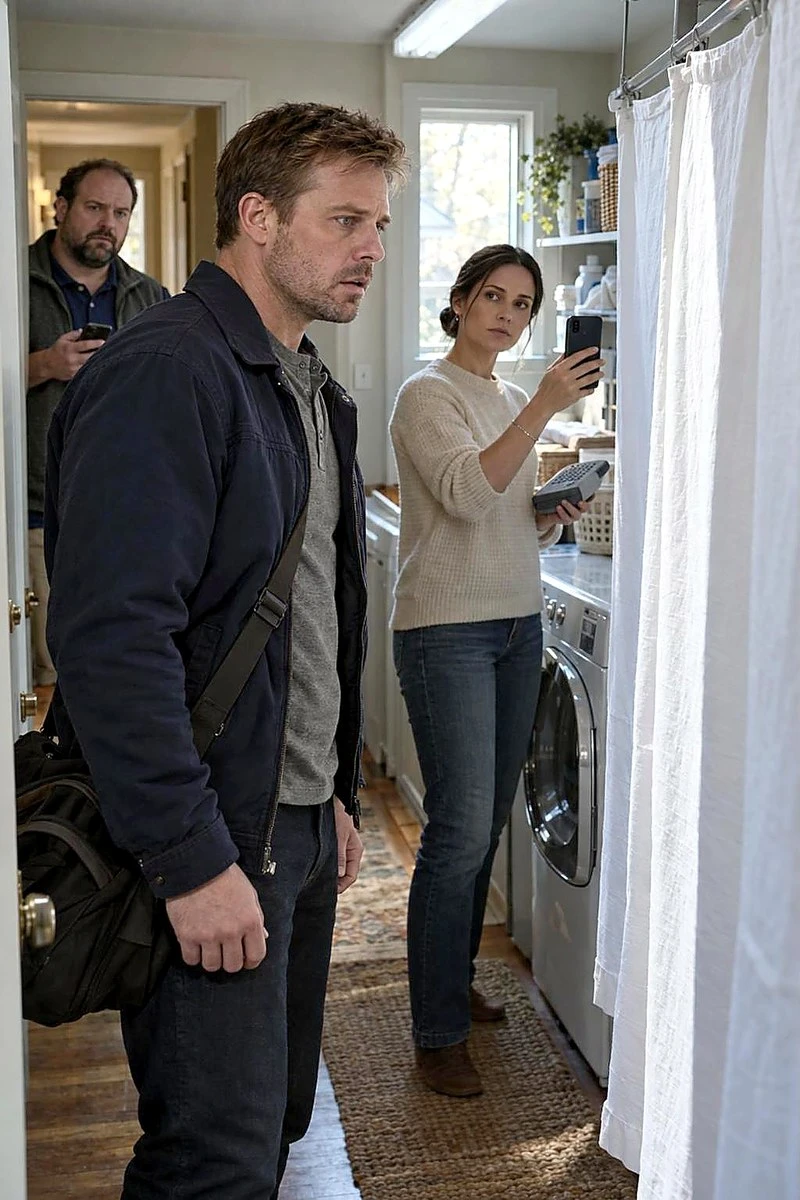
On the first page of Celeste’s filing, June was reaching away from me—and the photograph made it look as if I was the reason.