Chapter 7: The Picture They Believed
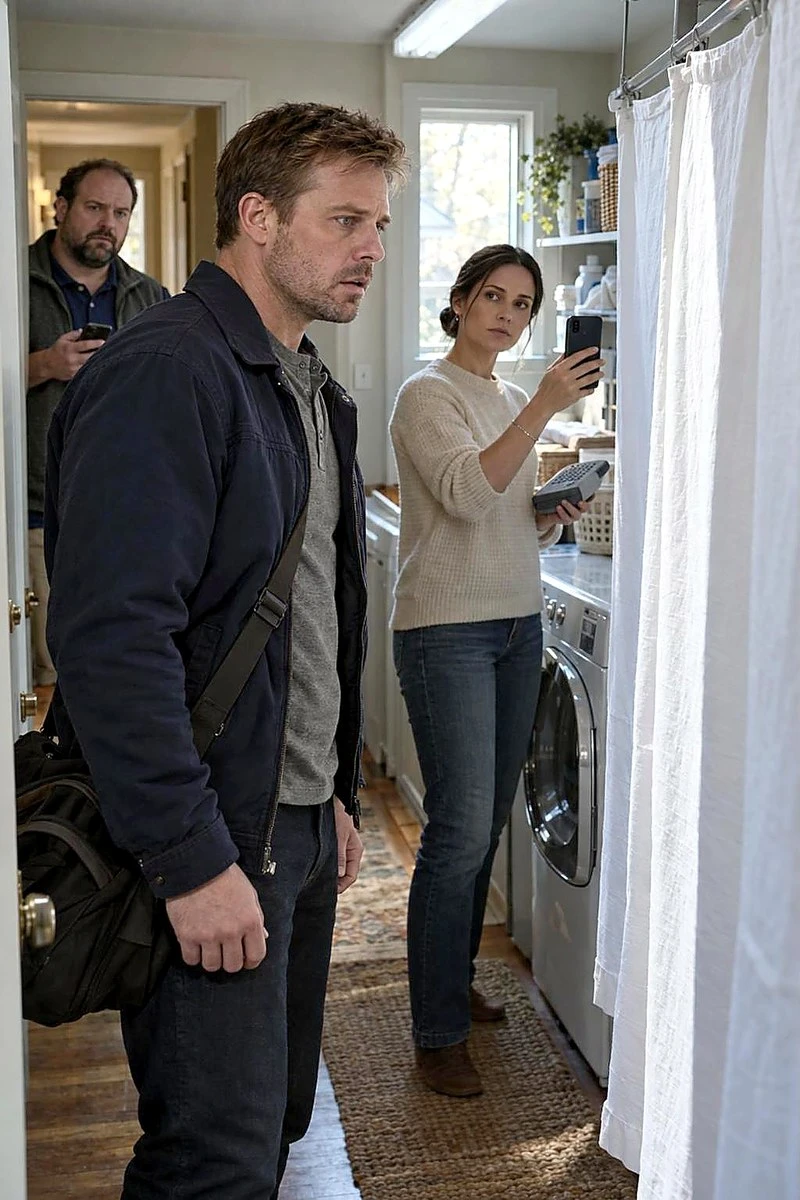
“That was the hallway,” I told Nina. “When I brought them out.”
Nina kept the photograph flat between us.
“What happened immediately before this?” she asked.
“Celeste had her phone pointed at me,” I said. “June reached for me. The label maker snapped, and she pulled back.”
“Who had the label maker?” Nina asked.
“Celeste,” I replied. “She’s outside the frame.”
Nina looked at the cropped edge.
“And your expression?” she asked.
“I’d turned toward Celeste,” I said. “I told her to stay back.”
“Did you raise your voice?” Nina asked.
“Yes,” I replied.
Nina wrote my answer beside the page.
“We’re not going to pretend that didn’t happen,” she said.
“I wasn’t shouting at June,” I replied.
“We’ll give the context,” Nina said. “We’ll also obtain what the emergency records and responding officers can establish.”
“Can you get the whole video?” I asked.
“We’re requesting the source,” Nina replied. “We don’t yet have a complete sequence corresponding to this still.”
I touched the printed edge.
June’s hand was suspended between us.
Mine was reaching toward her.
Celeste had disappeared.
My phone vibrated on Nina’s desk.
A message from Aunt Meredith appeared.
Please tell me this isn’t what it looks like.
The same photograph sat beneath her words.
I turned the screen toward Nina.
“She’s sending it to family,” I said.
Nina pushed my phone back.
“Don’t argue through the children,” she told me. “Don’t ask them to explain the picture to relatives.”
“I won’t,” I replied.
A second message arrived.
Celeste says she just wants her children safe. Call me.
I set the phone face down.
Nina collected the pages.
“We’ll respond to the request,” she said. “Keep what was sent to you.”
* * *
I called Meredith from my parked truck outside Nina’s office.
“Tell me what you saw,” I said.
“I saw June pulling away from you,” Meredith replied.
“That’s a frame from when I brought them out,” I said. “Celeste was holding the label maker outside the picture.”
“Ethan, I’m looking at your face,” Meredith said.
“I raised my voice at Celeste,” I replied. “I’ve told the investigator and my attorney that.”
“Your brother says you’re making this worse,” Meredith said.
“Russell has acknowledged knowing where the children were sent,” I replied. “He changed my work assignments.”
“He says it was a time-out,” Meredith said.
“The records show otherwise,” I replied.
“Then let everyone see the records,” Meredith said.
“The appropriate people have them,” I told her. “I’m not circulating the children’s interviews.”
Meredith went quiet.
“Celeste handled school and appointments for years,” she said. “Now everything she did is suddenly suspect?”
“I found my children behind hanging sheets,” I replied.
“And you were upset,” Meredith said.
“Yes,” I told her. “I was.”
“I don’t know what to believe,” Meredith said.
I held the phone away from my mouth.
Then I brought it back.
“Don’t contact the children about this,” I said.
“I would never upset them,” Meredith replied.
“Then leave them out of the conversation,” I told her.
I ended the call before I tried to make her understand by saying more than I should.
The photograph remained on my screen.
* * *
Two days later, I sat beside Nina at an interim hearing.
Celeste sat across the room with her attorney.
Her silver bracelet rested against a closed folder.
She kept her hands folded over it.
Nina placed the complete voice-message exchange with the other submitted records.
The photograph lay in Celeste’s packet.
When I was asked about my conduct during the rescue, I answered.
“Yes,” I said. “I raised my voice.”
“And you failed to follow up on your daughter’s earlier request?” the judge asked.
“Yes,” I replied.
“Did you authorize the practice described in the notebook?” the judge asked.
“No,” I said.
Nina directed attention to the complete exchange, the separate interviews, the school records, and the ongoing investigation.
Celeste’s attorney argued that the children’s fear might have more than one source.
When Celeste was asked about the children’s care, she straightened the folder beneath her hands.
“I’ve handled their days,” Celeste said. “Their appointments, their school things, their bedtime. Ethan was away.”
“And the arrangement in the laundry room?” the judge asked.
“It was quiet practice,” Celeste replied. “He arrived upset and made it frightening. I want the children somewhere calm while this is resolved.”
“With you?” the judge asked.
“Yes,” Celeste said.
Nina turned a notebook photograph toward the court.
“The existing concerns are documented independently,” Nina said. “If further assessment is required, the children can remain with their approved caregiver.”
Celeste pressed her bracelet against the folder.
“They need their mother,” she said.
I watched Celeste while her attorney continued.
She looked toward me once.
Then she lowered her eyes to the folder.
The judge ordered an expedited independent assessment.
Pending that review, the children would remain with Cora.
My contact would be supervised.
Nina put a hand against my sleeve before I stood.
The existing concerns still prevented an unsupervised return to Celeste. Her request for expanded access remained subject to separate review.
I heard all of it.
But one sentence stayed louder.
I wasn’t going back to the downstairs room.
In the corridor, I stopped beside a drinking fountain.
“They’re already with Cora,” I told Nina.
“They’ll stay there,” she replied.
“Without me at night,” I said.
“Your contact is temporary and structured while the assessment proceeds,” Nina told me. “We’re seeking prompt review.”
“On the strength of that picture?” I asked.
“On the competing allegations and unresolved concerns,” Nina replied. “We challenge it with the full record. We comply while we do.”
Celeste came through the courtroom door.
Her attorney walked beside her.
She looked at me.
I took one step.
Nina stayed between us.
“Come with me,” Nina said.
Celeste continued toward the elevator.
I let Nina guide me in the other direction.
* * *
Cora stood beside the downstairs bedroom door while I packed.
June and Micah were at an appointment with the coordinating worker.
My shirts fit into one bag.
The children’s bag stayed on their dresser.
“Where will you sleep?” Cora asked.
“A room near the contact center,” I replied.
“Have you eaten?” she asked.
“I need to finish this,” I said.
Cora picked up my charger.
She didn’t put it in the bag.
“You can finish and eat,” she told me.
I sat on the bed.
The blue house was on the bedside table.
I left it where it was.
“How do we explain it?” I asked.
“We tell them what changes and what doesn’t,” Cora said. “I’m still here. Their room is still here. We tell them when they’ll see you.”
“What if June thinks she caused it?” I asked.
“Then we tell her she didn’t,” Cora replied.
I looked at the open doorway.
“I promised I’d be next door,” I said.
“You told them what was happening that night,” Cora said. “You didn’t promise a judge couldn’t change the arrangement.”
“It won’t sound different to them,” I replied.
Cora put the charger beside my bag.
“No,” she said. “It might not.”
I pointed toward the blue house.
“If June puts that beside you, will you stop?” I asked.
“Yes,” Cora replied.
“Even if she’s only checking?” I asked.
“Yes,” Cora said. “I saw you explain it. I’ll ask whether she wants help or company.”
“Micah uses it too,” I told her.
“I know,” Cora said.
I reached for the house, then stopped.
“Leave it,” Cora told me.
“I was going to put it closer to the bed,” I said.
“June put it there,” Cora replied. “She’ll know where to find it.”
I lowered my hand.
She sat in the chair by the door.
“The allegation unsettled me,” Cora said.
I looked up.
“The photograph?” I asked.
“And the message,” she replied. “I wanted to understand before deciding what I was seeing.”
“Do you believe her?” I asked.
“I believe I need to follow the protective plan and tell the professionals what I actually observe,” Cora said. “I told the assessor I was unsettled. I also told them what happened here.”
I stood.
“What did you tell them?” I asked.
“That you stopped when June brought the house,” Cora replied. “That you handled Micah’s spilled water. That you didn’t question them about Russell.”
I put the charger in my bag.
Cora hadn’t offered me blind loyalty.
She had offered observations.
I needed those more.
* * *
The first supervised visit took place in a room with a square table and a shelf of games.
A monitor named Paula showed me where to sit.
“The children will come in with Cora,” Paula told me. “We’ll follow the visit arrangements.”
“Can I hug them?” I asked.
“Let them choose,” Paula replied.
June stopped when she saw me.
Micah walked straight into my knees.
I held him after he put his arms around me.
June stayed beside Cora.
“Why didn’t you sleep there?” June asked.
“The adults changed the arrangement while they review things,” I said. “You didn’t cause it.”
“Did I say something wrong?” June asked.
“No,” I replied.
June took the house from her pocket.
I moved my hand off the table to give her room.
She put it beside my elbow.
I stopped.
June looked at Paula.
“Does it work here?” June asked.
“Yes,” I told her. “I can pause here.”
Paula remained in her chair.
I stayed still until June pulled out the chair opposite me.
Micah found a game with plastic pieces.
“Can you do this?” he asked.
“I can try,” I replied.
We played.
I didn’t ask about Celeste.
I didn’t ask what they had told the assessor.
When Paula told us the visit was nearly over, June looked toward the clock.
“Are you coming back tomorrow?” June asked.
“The next visit is on the schedule,” I said. “Cora will show you when.”
“Not tomorrow?” June asked.
“Not tomorrow,” I told her.
Micah held a game piece toward me.
“Take this so you remember,” he said.
Paula leaned forward slightly.
“That belongs to the room,” she told him.
I set the piece back on the table.
“I remember without taking it,” I told Micah.
He watched me put it down.
June picked up the blue house.
Cora held the door open.
I stayed in my chair until they were through it.
* * *
A week later, Nina put a new submission on her desk.
“Russell provided selected progress clips,” she said. “Celeste is relying on them in support of expanded contact.”
“Progress,” I repeated.
Nina turned her screen toward me.
“These are the files submitted,” she said. “I want you to identify anything you recognize.”
The first showed the living-room rug.
June held the school project.
“I can settle and start again,” June said in the recording.
The second showed Micah beside the same chair.
“Mom helps us be ready,” Micah said in the recording.
Nina stopped playback.
“Did Russell supply these through his attorney?” I asked.
“They’re included in the materials supporting Celeste’s request,” Nina replied. “We’re documenting the submission and asking for the relevant source material.”
“What did he say they showed?” I asked.
“That the children were comfortable with the routine,” Nina replied.
I looked at the still frame on her screen.
Micah’s hand rested on the chair seat.
“Comfortable in a recording,” I said.
“Selected recordings don’t establish the whole home environment,” Nina replied. “Neither does a single photograph. We’ll keep the sources and limits clear.”
“That one was sent to me,” I said, pointing at the first file. “The second wasn’t.”
“Don’t guess about the others,” Nina replied.
I looked at the printed notebook pages.
“Can I see that page?” I asked.
Nina slid it over.
The phrase was there.
Settle and start again.
Below it was another reminder about being ready.
“These are her words,” I said.
“They match wording in the notebook,” Nina replied. “That matters. It doesn’t tell us everything about how each recording was made.”
“They’re presenting it as the children telling the truth,” I said.
“They’re presenting it as evidence of a harmless routine,” Nina replied. “We’ll address its source, context, and relationship to the other records.”
I pushed my chair back.
“He knew what the sound meant,” I said. “He admitted it.”
“We have that,” Nina replied.
“Then why does he get to supply this?” I asked.
“Because we examine what’s submitted,” Nina said. “We don’t let an agreeable-looking file erase the rest.”
I reached for my phone.
Nina watched my hand.
“Who are you calling?” she asked.
“Celeste,” I said.
“To say what?” Nina asked.
I stopped with the phone in my palm.
“That she knows what she did,” I replied.
“She knows you dispute her account,” Nina said. “You don’t need another conversation she can select from.”
I set the phone down.
Nina turned the notebook page so its heading faced me.
“The work is here,” she said. “The records. Your conduct now. The assessment.”
I pulled my chair back toward the desk.
* * *
At my rented room, I put the next visit time on the small calendar above the desk.
Someone had used the wall for a different calendar before me.
Four pale squares marked the corners.
Cora called while I was checking the date.
“The children are in bed,” she told me.
“How was today?” I asked.
“Micah finished his puzzle,” Cora said. “June helped me put away groceries.”
“Did she ask to call me?” I asked.
“Not tonight,” Cora replied.
I kept my eyes on the calendar.
“Okay,” I said.
“That isn’t a verdict on you,” Cora told me.
“I know,” I replied.
I didn’t know it in the part of me that watched the phone.
“Meredith called,” Cora said.
“What did she want?” I asked.
“To discuss Celeste,” Cora replied. “I told her I’m not having that conversation around the children.”
“Did she speak to them?” I asked.
“No,” Cora said. “I ended the call.”
I sat on the edge of the bed.
“Thank you,” I told her.
Cora waited.
“You can ask me about their day,” she said. “You don’t have to search it for clues.”
I looked at the calendar again.
“Did Micah put the last piece in himself?” I asked.
“Yes,” Cora replied. “Then he took it out and did it again.”
I closed my eyes.
For a moment, the room became only a room.
Then Cora told me June had asked whether drawing paper was kept in the kitchen.
* * *
Cora called again the next afternoon.
“I’ve contacted Bell,” she told me.
I stood beside the desk.
“What happened?” I asked.
“June asked for paper,” Cora said. “She drew while I was making dinner. I didn’t ask her to draw anything in particular.”
I moved the calendar aside to clear the desk.
“Is she okay?” I asked.
“She’s with Micah in the front room,” Cora replied.
“What did she draw?” I asked.
“The laundry room,” Cora said. “She said something on her own. I wrote it down exactly as I heard it.”
“Did you ask questions?” I asked.
“No,” Cora replied. “I kept the drawing and contacted Bell. He told me how to preserve it.”
I put my free hand on the desk.
“Don’t make her explain it again for me,” I said.
“I won’t,” Cora replied.
“Can I see it?” I asked.
“Bell said I could send you a copy,” Cora told me. “The original stays with the record.”
My phone vibrated.
I opened the image.
There were the hanging sheets.
The small figures.
The shelf.
June had drawn a rectangle above them again, heavier this time, with a line down its side.
I enlarged the lower edge.
Across the bottom of June’s drawing, she had written five words: THE PHONE STAYED WITH US.